Some time ago, I established that 73% of the deaths during the TBR construction period (JUN 42 – OCT 43) were due to infectious causes with dysentery and cholera as leading causes followed by malaria. This figure has held steady as new data was added. It is, however, based on about 10,000 lines of data of those with known causes of death during that period. There are still some 2500 men for whom a COD has yet to be logged. That comprises 17% of the total number of deaths.
But while infections were taking a heavy toll of these men, they were subjected to another indignity: friendly fire. An additional 2600 men died at the hand of their own troops. The majority of these were as a result of the sinking of various Hellships carrying TBR veterans to Japan (shown as outbound in the attached chart). The month of SEP 1944 was particularly harsh for the TBR veterans. 99% (2334/2355) of the deaths that occurred that month were due to these friendly fire incidents.
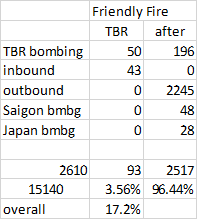
But there were also a number of incidents[1] where Allied planes bombed the Railway and inadvertently killed POWs. Most notable among these was the SEP 1944 raid on the rail yard at Nong PlaDuk that killed 100 POWs[2] (57 Dutch and 43 UK). While this specific attack was part of broader efforts to disrupt Japanese logistics and transportation infrastructure, it was reportedly carried out by the newly arrived B-29 Superfortress bombers flying out of South China. These missions, which included attacks on the city of Bangkok, were used as training missions for the air crews who would later attack the Japanese Mainland.
Unfortunately, as was the case in other locations, the Dutch/British camp was only meters from the actual rail yard. With the accuracy (or lack thereof) of the bomb sights of the era, it could hardly be avoided that bombs fell on the camp. These 100 documented deaths[3] are the largest single friendly fire incident during this project.
Regular bombing raids on Mainland Japan were also underway and one such raid on Tokyo in JUL 1945 killed 23[4] TBR veterans. Many of these were Dutch and they are commemorated (not buried) at the Ereveld Menteng Pulo war cemetery (aka the Jakarta Netherlands Field Of Honor) in Jakarta, Indonesia. Other Australian casualties are buried in the CWGC Yokohama War Cemetery. One incident that receives a lot of press is the atomic bomb attack on Nagasaki that reportedly killed a number of POWs. I have been unable to verify that any TBR veterans were involved, although some are thought to have been present.
In APR 45, a random attack by Allied planes on a train near Saigon in French IndoChina killed 48 TBR veterans[5].
Altogether, friendly fire incidents claimed the lives of over 2600 TBR veterans or 17% of the total deaths with 96% of those occurring in 1944-45 long after construction on the TBR was complete and those veterans were bring dispersed throughout Asia or consolidated to large camps in Thailand.
[1] It wasn’t until the SEP 1944 sinking of the Rakuyo Maru and the rescue of some of the men that the Allied Command learned that there were POWs working the Thai-Burma Railway.
[2] It is also documented that during this raid, 2 British POWs simply walked away from the camp and made their way north. Aided by Thai partisans, they eventually made a successful escape to India.
[3] Because of the nature of the injuries, these 100 men are named but are buried in a series of communal graves at the main CWGC war cemetery in Kanchanaburi. It is also possible that there were additional deaths that were not documented.
[4] Five others were KIA in Japan in separate incidents.
[5] Other POWs may have been killed in these named incidents, but I only have documentation on those who were TBR veterans.