
WHAT LIES BENEATH?
Rethinking the Graves at Don Rak Cemetery
Each year, thousands of visitors walk through Kanchanaburi War Cemetery in Thailand, known historically as Don Rak Cemetery. They pause quietly before the perfectly aligned rows of white gravestones. Nearly 7,000 markers stretch across the carefully manicured grounds. Each bears a name. A rank. A service number. A date of death. The visual impression is immediate and powerful. Here lies a man.
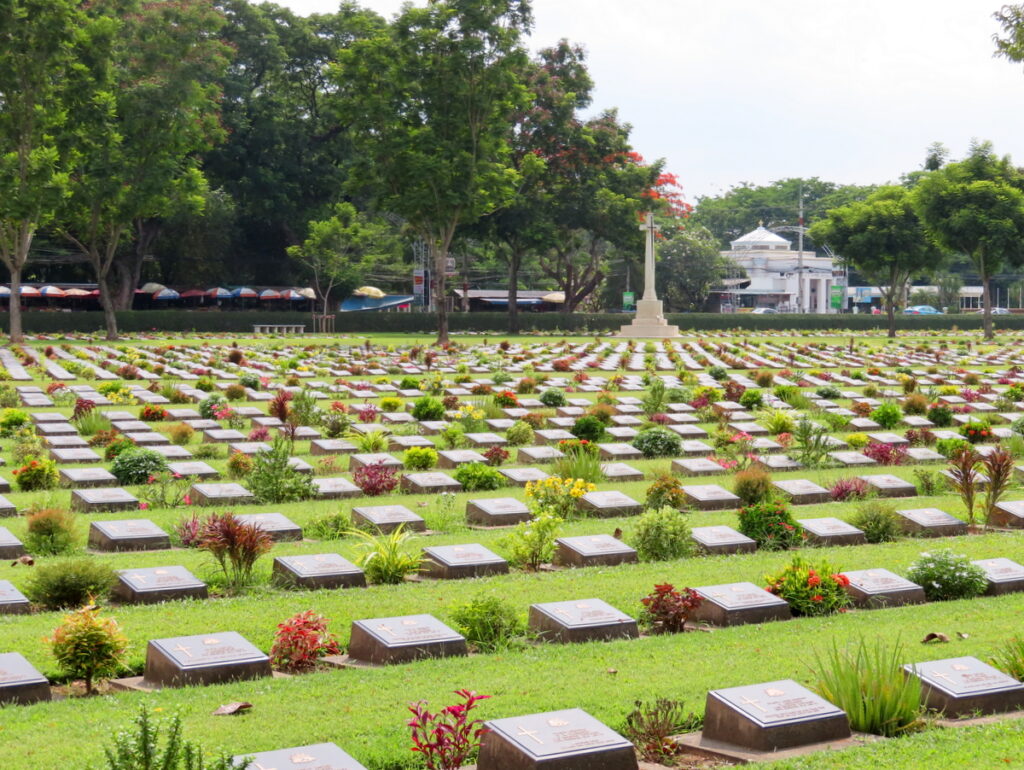
Beneath this stone rests the soldier whose name is engraved above. Simple. Orderly. Final. But what if that assumption is not entirely true? Those visitors to Don Rak Cemetery assume each gravestone marks the final resting place of the individual named above. Yet for nearly twenty percent of the cemetery, the only certainty lies in the inscription itself — not necessarily in the bones below.
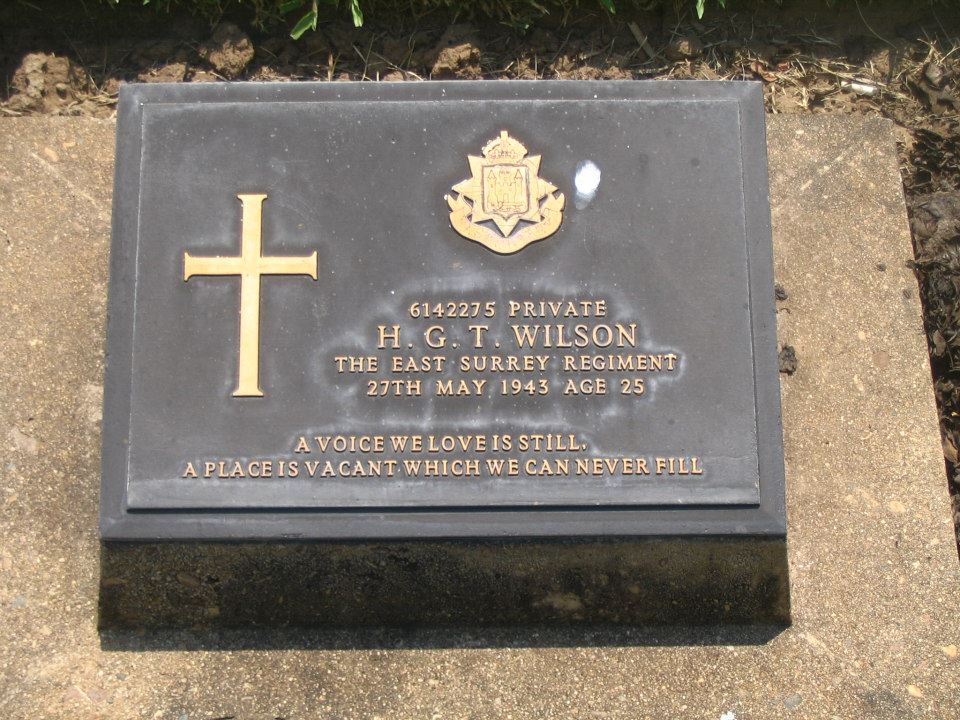
Over recent years I have spent considerable time examining original burial data from the Commonwealth War Graves Commission relating specifically to Don Rak Cemetery. In doing so I began noticing patterns hidden within the records that few visitors — and perhaps few historians — would ever consider.
The common assumption is straightforward. One grave marker equals one individual burial. One man. One body. One grave. The records tell a more complicated story. Of the 6,897 commemorative entries associated with Don Rak Cemetery, only 5,650 represent conventional individual burials. In these cases, one identified man is associated with one identified grave.
For nearly twenty percent of the cemetery reflects something far more complex. These are not simple individual burials. Instead, they represent the extraordinary difficulties faced by Allied Graves Registration teams ed after the war with recovering the dead from the vast burial grounds scattered along the Thai–Burma Railway construction.
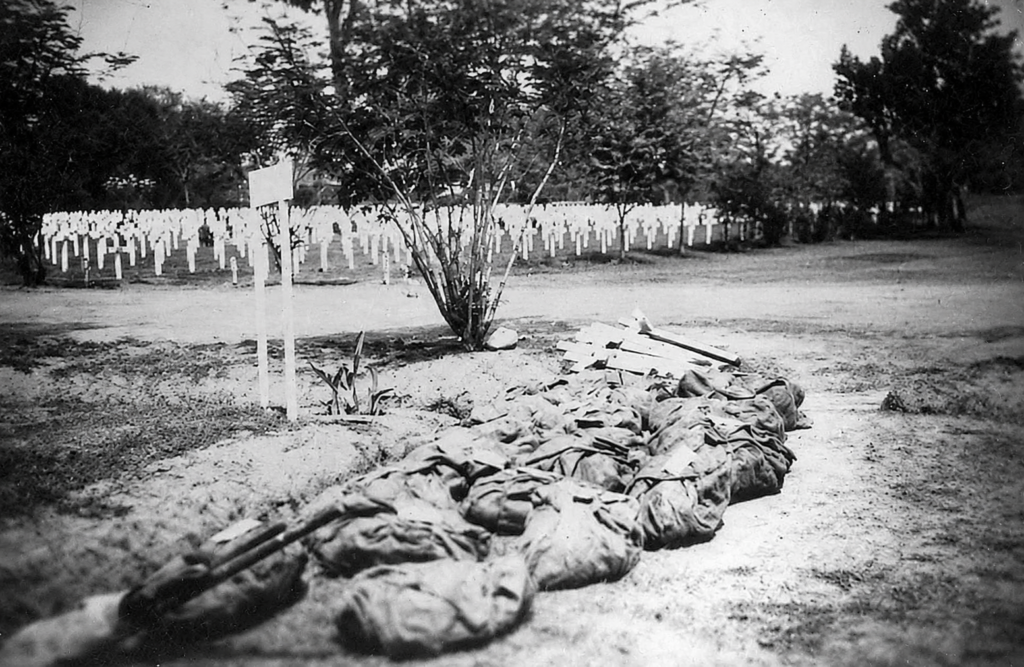
Many prisoners had originally been buried in communal graves. Cholera outbreaks frequently claimed dozens of men within days. Emergency wartime burials often placed large numbers of bodies together in hastily dug pits. Months later, sometimes years later, postwar recovery teams exhumed these burial sites in an effort to provide dignified permanent burial. But they faced a terrible problem.
Imagine excavating a grave containing forty men. The records tell you exactly who died there. The names are known. The dates are known. But decomposition has done its work. Inside the grave lie: 40 skulls, 40 pelvises, 80 femurs and hundreds of ribs and vertebrae. All intermixed. All impossible to separate.
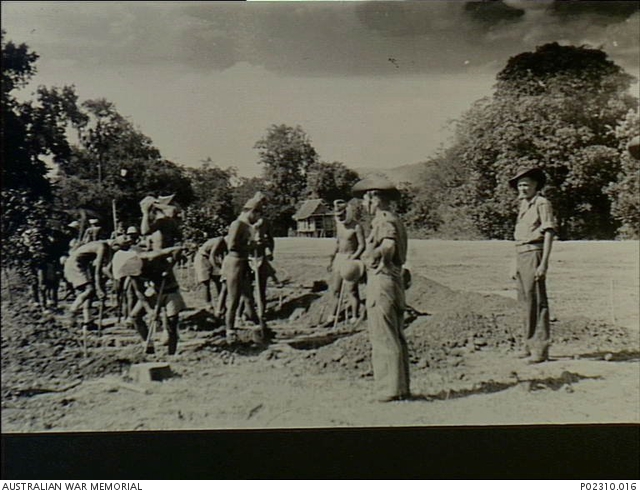
The recovery teams now face an impossible question. Which skull belongs to which man? No forensic science available in 1946 could provide an answer. Yet these men deserved individual remembrance.
So the CWGC made the only humane decision available. Each known man would receive his own grave marker. Each name preserved. Each sacrifice individually recognized. But biologically, certainty had vanished. The grave marker says one thing. The earth beneath may tell another story entirely. In other cases, entire communal graves were left intact.
The individual dead are known by name, but rather than separate burial plots their names appear collectively on memorial structures at the edge of the cemetery. Other graves contain commingled remains of two or three men whose identities were known but whose skeletal remains could never be assigned with certainty to any one individual. One grave contains no remains at all!
The cemetery remains visually perfect. But beneath the surface lies a hidden complexity few visitors ever imagine. In short, for nearly one grave in five at Don Rak, the certainty lies not in the remains beneath the marker but in the historical record itself. The names are certain. The dates are certain. The bones are not.
It is important to understand that the CWGC was never attempting deception. Quite the opposite. The postwar recovery teams were confronted with some of the most difficult burial conditions imaginable. Mass graves. Jungle burials. Cholera pits. Tropical decomposition. Commingled skeletal remains impossible to separate.
Their task was not scientific perfection. It was moral responsibility. If the records established who had died, every man deserved to be remembered as an individual, even where biology could no longer provide certainty.
And so Don Rak Cemetery presents us with a remarkable paradox. What visitors see is perfect order. Rows of identical gravestones suggesting absolute certainty. But what lies beneath reminds us of the chaotic and brutal reality of war.
Perhaps the simplest way to understand this hidden truth is with one final image. Imagine a communal grave. Forty skulls. Forty names. But no possible way of knowing which skull belongs to which man. That is the quiet reality hidden beneath portions of this beautiful cemetery.
Visitors see certainty. The ground remembers chaos. And perhaps that, more than anything else, reminds us just how difficult it was to restore dignity to the dead after the nightmare of the Thai–Burma Railway finally ended.