
Geography of Death: How Location Determined How Men Died
For decades, discussion of mortality on the Thai–Burma Railway construction has focused overwhelmingly on a single question: How many men died? The accepted narrative generally treats prisoner mortality as a single, undifferentiated consequence of brutality, starvation, disease, and overwork spread more or less uniformly across the entire railway. Yet when individual prisoner deaths are examined geographically, a far more complex pattern emerges. The evidence suggests that different sections of the railway produced fundamentally different patterns of mortality.
Using more than 10,500 recorded Allied prisoner deaths occurring during the active railway construction period, deaths were divided into four operational sectors: the Lowlands of Thailand, the Highlands, the Mountainous sector, and Burma as a whole. The resulting distribution reveals a striking fact. Geography did not merely determine when and where men died. Geography strongly influenced how they died.
Thailand’s Lowlands sector, representing the lower Thai section of the railway, produced a mortality pattern dominated by chronic gastrointestinal disease and severe nutritional deficiency. Gastrointestinal disease accounted for 37.6 percent of recorded deaths, while dietary deficiency accounted for another 30.2 percent. Just these two categories represented nearly seventy percent of all deaths in this sector. At first glance, this suggests that the lower railway camps were primarily environments of prolonged biological attrition in which prisoners slowly deteriorated through chronic dysentery, starvation, and physical exhaustion.
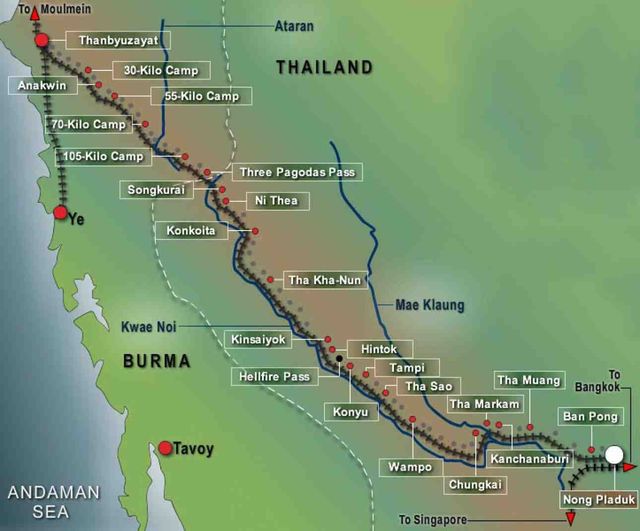
Yet this interpretation requires immediate qualification. Approximately forty percent of all Zone A deaths occurred at the major hospital complex at Chungkai War Cemetery. By the later stages of railway construction, Chungkai increasingly served as a retrograde medical receiving center where seriously ill prisoners from camps farther north were transported for treatment. This means that many deaths recorded in the Lowlands did not necessarily reflect conditions unique to lower railway construction itself. In effect, a substantial portion of Lowlands mortality represents men who more than likely became fatally ill elsewhere but died after evacuation southward to hospital facilities.
The Highlands sector presents a markedly different pattern. Here gastrointestinal disease remained the largest single cause of death at 41.5 percent, but cholera suddenly emerged as a major killer, accounting for nearly 16 percent of all deaths. This sector also includes the hospital camp at Tarsao, which functioned much like Chungkai. Prisoners working farther north frequently retrograded to the Tarsao hospital, but for warehousing not treatment, meaning the Highlands sector similarly combines deaths occurring at active camps with deaths geographically displaced through the railway’s medical evacuation system. The mortality profile here therefore reflects both worsening camp conditions and the increasing concentration of severely ill prisoners transported back from more remote work camps.
The most dramatic finding occurs in the Mountainous sector. Here cholera accounted for an astonishing 34.9 percent of all recorded deaths, more than one in every three men who died in this region. This was the area inhabited by the F & H Forces primarily. Unlike dysentery, malaria, malnutrition, or generalized infection, cholera behaved differently. Prisoners exhibiting cholera symptoms were rarely transported because the disease spread rapidly, quarantine was essential, and severely dehydrated patients frequently collapsed within hours. In epidemiological terms, cholera deaths are geographically reliable. The place of death closely approximates the place of infection. This makes the Mountainous sector the clearest epidemic zone on the railway and strongly suggests that the upper mountain camps represented the principal cholera epicenter of the entire construction system. There was some epidemic spillover into the Hintok area, but cholera cases remained relatively uncommon in the camps farther south or across the border into Burma
Burma presents a fourth and entirely different mortality pattern. Very little Cholera spread here, accounting for only 1.4 percent of deaths. Instead, mortality becomes more broadly distributed. Gastrointestinal disease again dominates at 41.4 percent, but other infection rises sharply to 13.2 percent. Injury deaths increase nearly tenfold compared to the Thai sectors, and war-related deaths become significantly more common. Burma was clearly not simply an extension of the Thai railway environment. Its geography, camp distribution, labor organization, and operational conditions created an entirely different mortality ecology. Unlike the Thai sectors, Burma never appears to have experienced the same concentrated epidemic conditions that characterized the upper mountain camps.
The most important conclusion may not concern disease at all, but methodology. Mortality statistics cannot be interpreted geographically without understanding the operational structure of the railway itself. Camps changed function over time. Locations that initially served as construction camps later became hospital receiving centers. Prisoners suffering from dysentery, malaria, malnutrition, and generalized infection were often moved retrograde toward medical facilities at ChungKai and Tarsao. As a result, the place where a prisoner died often differed substantially from the place where the fatal disease process began.
Only cholera largely escaped this distortion. Because symptomatic cholera patients were rarely moved, cholera mortality remains the single most geographically reliable marker in the dataset. This explains why the concentration of cholera deaths in the Mountainous sector is perhaps the strongest epidemiological finding in the entire analysis.
There is one counter-intuitive conclusion to be drawn here. The earliest arrivals on the TBR fared the best. Counter-intuitive, because these men endured captivity and forced labor for the longest period of time, yet overall conditions in the early Lowlands camps remained significantly less lethal than those encountered later at Kilo 125 and beyond.
The standard history of the railway asks a simple question: How many men died building the railway? The actual numbers suggest a more sophisticated question. Where were men working — and how did geography determine the way they died?
The answer is now becoming clear. The Thai–Burma Railway was not a single environment of suffering. It was a series of distinct operational zones, each producing its own characteristic pattern of death.
History has long counted the dead. Only now are the numbers beginning to explain how they died.