
Chungkai — The First Regional Hospital
Tarsao — The Forward Referral Hospital
Tambaya — A Hospital Born of Catastrophe
Tamarkan — The Consolidation Hospital
Nakhon Pathom — The First True Base Hospital
One of the least understood aspects of the Thai–Burma Railway is the evolution of its prisoner-of-war medical organization. Histories frequently refer to “hospital camps” as though they formed part of a coherent Japanese medical plan established before construction began. The available evidence suggests a markedly different story. Rather than emerging from deliberate planning, the railway’s medical evacuation system evolved in response to operational necessity. It developed because increasing numbers of prisoners became too ill to continue working, while Allied medical officers and orderlies struggled to preserve life under conditions that steadily deteriorated throughout the construction period.
Understanding this evolution is important because it changes the way the railway itself is interpreted. The camps that later became known as hospitals did not begin as hospitals at all. Most originated as ordinary construction camps, performing the same engineering functions as dozens of others scattered along the railway. Their medical importance developed only after construction advanced beyond them, leaving behind growing numbers of prisoners who could no longer continue moving with their work parties.
The emergence of an increasingly organized medical referral network, rather than the histories of individual hospital camps alone, provides the broader context for understanding medical care on the Thai–Burma Railway. At its lowest level nearly every construction camp possessed a small sick tent or hospital hut responsible for treating its own prisoners. As the railway advanced northward, however, these local facilities became incapable of coping with the growing numbers of seriously ill men. Some camps consequently assumed wider responsibilities, receiving patients from other camps and gradually developing into regional hospitals. After construction ended, still further changes occurred as the Japanese consolidated prisoners into fewer locations and established larger permanent medical facilities.
The evidence assembled from contemporary memoirs, medical accounts, military records, cemetery records, and the mortality database indicates that this evolution occurred in several distinct stages. Chungkai became the first major regional receiving hospital in the lower Thailand sector. Tarsao subsequently emerged as the forward referral hospital supporting the advancing construction camps beyond Wang Po. Tambaya in Burma represented a specialized response to the catastrophe that overwhelmed F Force. While Tamarkan assumed a different medical role only after railway construction had been completed, Nakhon Pathom became the first true hospital intentionally established by the Japanese after construction had ceased.
The distinction between these hospitals is important. They were not interchangeable institutions performing identical functions. Each arose under different operational circumstances, served different prisoner populations, and reflected a different stage in the evolution of medical care on the Thai–Burma Railway. Their histories collectively demonstrate how Allied medical personnel gradually created an increasingly effective system of evacuation, referral, and treatment despite possessing few medicines, little equipment, and almost no support beyond their own professional knowledge and determination.
This interpretation also helps explain an otherwise puzzling feature of the historical record. Mortality was not distributed evenly across the railway. Certain camps acquired reputations because they increasingly concentrated the sick and dying from surrounding areas. Their high mortality therefore reflected not simply local disease conditions but their expanding role as receiving centers within an evolving medical network.
From Construction Camps to Referral Hospitals
When the first Allied prisoners arrived in Thailand during 1942, they did so as organized military formations rather than as isolated individuals. British, Australian, Dutch, American, and other contingents each retained much of their existing military organization. They arrived with commanding officers, medical officers, and support personnel accustomed to operating as cohesive units. Wherever a new construction camp was established, these men naturally recreated the essential elements of military life, including rudimentary medical facilities for those unable to work.
The Japanese provided remarkably little medical infrastructure. Their overriding objective remained the rapid construction of the railway. Every prisoner represented a potential laborer, and every day’s work lost to illness slowed construction. Consequently, camp commanders generally sought to maximize the available workforce, while Allied medical officers attempted to protect prisoners whose deteriorating physical condition made continued labor impossible. Throughout the construction period these competing priorities remained in constant tension.
Initially, each construction camp functioned independently. A small hospital hut or sick tent cared for prisoners suffering from minor illness or injury. Construction camps were temporary by design. Each camp occupied only the section of railway then under development. Once its assigned section had been completed, the entire workforce moved forward to establish the next camp. The railway advanced through a continuous process of leapfrogging from one location to another. Healthy prisoners moved with the engineers. The seriously ill could not. This created an administrative problem that neither side had anticipated.
The practical solution proved remarkably simple. Selected camps whose construction responsibilities had ended gradually became repositories for prisoners no longer capable of working. Medical officers who had previously supervised small camp hospitals suddenly found themselves caring for growing numbers of patients transferred from camps farther west. Without any formal policy or written directive, ordinary construction camps slowly acquired entirely different functions: they were now warehouses for the dying.
This evolution was neither immediate nor uniform. Different hospitals developed for different reasons, at different times, and under different circumstances. Their individual histories illustrate how the Allied medical organization adapted continuously as railway construction progressed, creating an increasingly sophisticated referral system that had never existed in the original plans of either the Japanese or the prisoners themselves.
Chungkai: The First Regional Hospital
The first major regional hospital on the Thai–Burma Railway evolved at Chungkai almost by accident. Nothing in the available evidence suggests that the Japanese originally intended the camp to become a permanent medical center. Like dozens of other camps established during the early stages of construction, Chungkai initially functioned as an ordinary engineering camp whose only responsibility was railway construction not patient care.
Its subsequent transformation resulted largely from geography.
Located approximately sixty kilometres from Nong Pladuk, Chungkai occupied a strategic position on the Kwae Noi River a short distance from Kanchanaburi. Chungkai was actually the first true construction camp. As the work in that sector was completed, healthy work parties moved onward to new camps, leaving Chungkai a rear-area installation. But its geography determined its fate. The nearby Mae Klong River was still a major obstacle; the bridges were not yet finished. That geography fundamentally altered the camp’s purpose. The Japanese Logisticians were making heavy use of boats and barges to move supplies to the camps on the banks of the Kwae Noi. Any prisoner who could not work could be placed on a returning boat and dropped at Chungkai.
This gradually became the accepted practice; not due to any plan, simply out of necessity. Instead of accompanying the advancing workforce, increasing numbers of patients remained at Chungkai under the care of Allied doctors and medical orderlies. Prisoners who became seriously ill at camps farther west could also be evacuated to Chungkai, where the medical staff possessed greater experience and somewhat better facilities than those available in newly established jungle camps. What had begun as a construction camp therefore evolved into a regional receiving hospital serving much of the lower Thailand sector. The river thus became more than a geographical feature; it functioned as an important medical evacuation route that helped sustain the emerging referral system.
Although medical facilities at Chungkai remained primitive by any modern standard, they nevertheless represented an improvement over any of the forward construction camps. Allied medical officers were able to concentrate their limited equipment, medicines, and trained personnel in one location rather than dispersing them among numerous isolated camps. Experience accumulated as increasing numbers of difficult cases arrived and medical orderlies developed practical expertise in managing the tropical diseases and nutritional disorders that dominated railway medicine.
This concentration of medical knowledge proved almost as important as the concentration of patients.
Edward “Weary” Dunlop’s diary at the point where he assumed responsibility as Senior Medical Officer at Chungkai in January 1944. What is striking is that it records the creation of a formal hospital diet organization, not merely clinical care. Dunlop proposed:
- appointment of a hospital dietician,
- establishment of a diet centre, and
- creation of a diet committee composed of medical officers, the Messing Officer, and the Chief Welfare Officer.
- dysentery wards,
- a scabies centre,
- plans for a new operating theatre,
111
The Japanese appear to have accepted Chungkai’s expanding medical role largely because it solved an administrative problem. Removing seriously ill prisoners from active construction camps reduced the burden on local commanders while allowing healthier men to remain at work. Whether this reflected humanitarian concern is doubtful. The arrangement simply allowed engineering operations to continue more efficiently while concentrating those no longer capable of labor in a single location. The equation was simple: fewer men unable to work equals fewer men needed to care for the sick as well as fewer unfit men to feed.
For the Allied medical staff, however, Chungkai represented something quite different. It became an opportunity to organize medical care on a scale that individual construction camps could never achieve. Doctors could consult one another, surgical procedures could be undertaken with whatever limited equipment was available, and scarce medical supplies could be directed toward the prisoners most likely to benefit. Survival remained uncertain, but the concentration of patients and medical personnel undoubtedly saved lives that would almost certainly have been lost had every camp attempted to care for its own seriously ill.
As construction progressed farther into the mountains during 1943, Chungkai became increasingly established as the principal hospital for the lower section of the railway. Prisoners evacuated from numerous camps eventually passed through its wards, while those who recovered sufficiently could sometimes rejoin labor units or be transferred elsewhere as circumstances required. Others never recovered and were buried in the adjacent camp cemeteries.
By the end of construction, Chungkai had become far more than a former construction camp with a large sick hut. It had evolved into the principal regional referral hospital of southern Thailand, demonstrating how necessity rather than planning shaped the medical organization of the Thai–Burma Railway.
Chungkai After the War
The importance of Chungkai did not end with the completion of the railway. Because it had served as the principal receiving hospital for the lower Thailand sector, many of the prisoners who died there were buried in the adjacent camp cemeteries. Consequently, when the war ended, Chungkai already contained one of the largest concentrations of hospital graves on the railway.
The Commonwealth War Graves Commission subsequently undertook the enormous task of recovering Allied burials from hundreds of isolated cemeteries scattered along the length of the railway. Most temporary burial grounds were excavated and the dead reinterred in the permanent cemeteries established at Kanchanaburi and Thanbyuzayat. This program transformed the scattered wartime graves into the cemeteries that visitors see today.
Chungkai, however, became a notable exception.
No known Commonwealth War Graves Commission document has yet been identified that explicitly explains why Chungkai was retained as a permanent cemetery rather than transferring all of its burials to nearby Kanchanaburi War Cemetery. The surviving records are silent on the Commission’s reasoning. One plausible explanation is that Kanchanaburi War Cemetery was already approaching its practical capacity as remains from throughout the Thai–Burma Railway were being concentrated there. Exhuming several hundred graves already established at Chungkai, transporting them only a short distance, and then reburying them again may have offered little practical advantage while requiring considerable additional effort[1]. Retaining and improving the existing cemetery may therefore have represented the more practical solution.
What is documented is that the Commission consolidated the two wartime burial grounds that had existed at Chungkai. The cemetery closest to the Kwae Noi River, which was vulnerable to seasonal flooding, was carefully exhumed and the remains reinterred on higher ground alongside the original cemetery. The result was the present Chungkai War Cemetery, preserving both the dignity of the graves and their close geographical association with the hospital in which so many of the men had died.
Unlike many post-war cemeteries that became repositories for graves collected from widely scattered locations, Chungkai retains a direct historical connection with the institution it commemorates. The cemetery remains adjacent to the site of the railway’s first major regional hospital, preserving an association between place, medical care, and sacrifice that has survived long after the hospital itself disappeared.
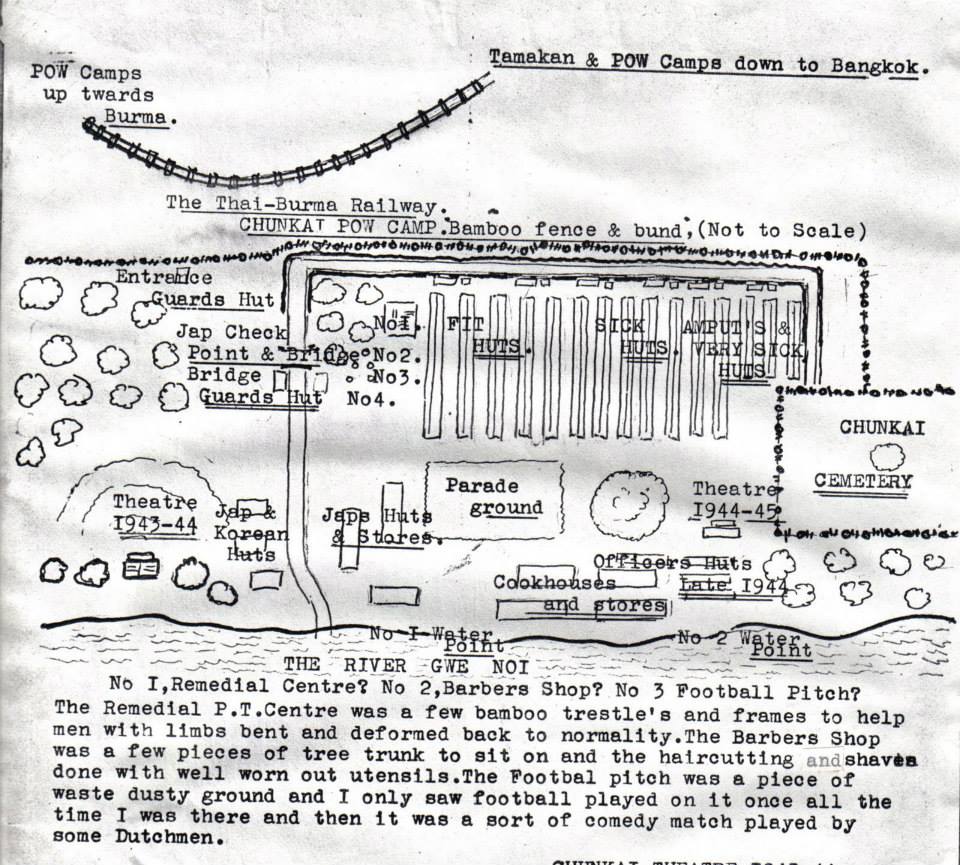
Today, visitors walking through Chungkai War Cemetery are not simply viewing another concentration cemetery. They are standing beside the location where the Allied medical evacuation and referral system first took recognizable form—a place where thousands of desperately ill prisoners received whatever care could be provided under some of the harshest conditions of the Second World War. That enduring relationship between hospital and cemetery gives Chungkai a unique significance within the history of the Thai–Burma Railway and explains why it occupies such an important place in the story of Allied prisoner-of-war medicine.
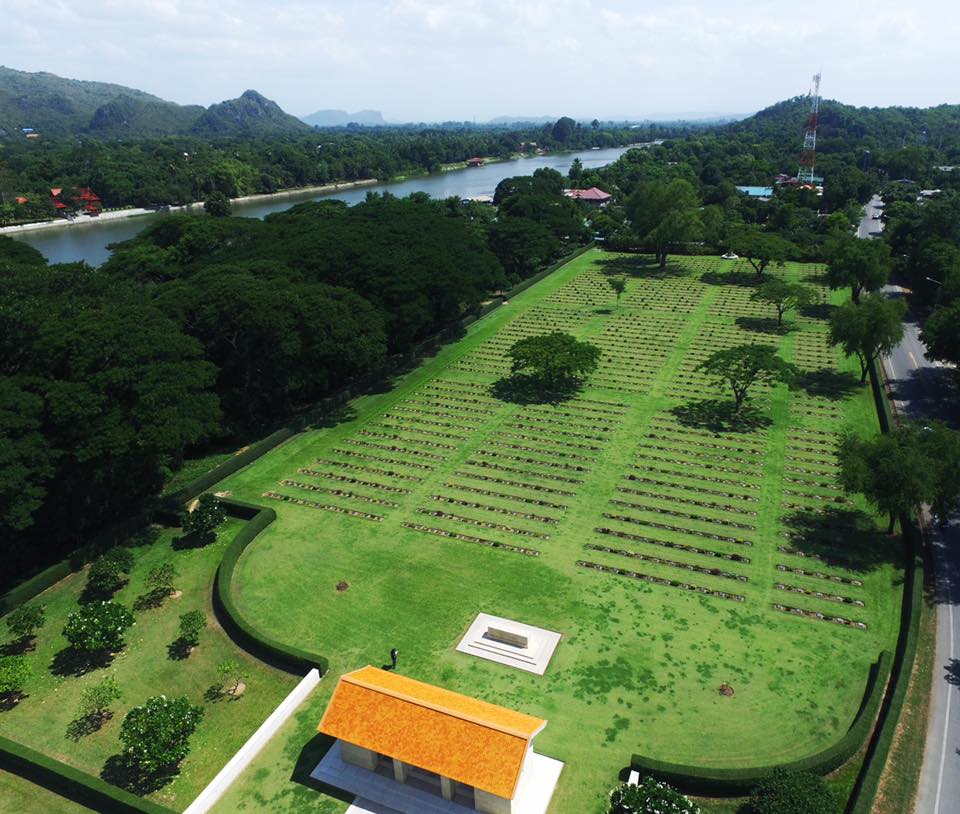
Figure 1 A modern drone view of the CWGC Chungkai cemetery
222
Tarsao: The Emergence of a Forward Operational Hub
If Chungkai represented the first stage in the evolution of the Allied medical evacuation system, Tarsao represented something considerably more complex. It did not simply evolve from an ordinary construction camp into another hospital. Rather, Tarsao assumed a succession of increasingly important functions as railway construction advanced through the Wang Po sector. Geography dictated that evolution.
Before the railway reached the area, Tarsao occupied a strategically important position immediately beyond one of the most difficult engineering obstacles on the Thai–Burma Railway. During the latter months of 1942, neither the railway bridges across the Mae Klong River nor the great timber viaduct at Wang Po had yet been completed. The railway itself could not yet serve as a transportation corridor. Access to the advancing construction front therefore depended upon the existing river communications and the overland route leading north from Kanchanaburi via the Tadan crossing.
Japanese survey parties appear to have reached the Wang Po–Tarsao district by boat along the Khwae Noi River while selecting the railway alignment[2]. Once the route had been established, engineer units and the earliest construction detachments followed. As work expanded, however, river transport alone could no longer sustain the enormous movement of labor, food, engineering materials, and military supplies required to support construction. Increasing numbers of Allied prisoners of war and Asian romusha consequently reached Tarsao by the overland route from Ban Pong through Kanchanaburi and across the Mae Klong at Tadan before continuing northward along the established communications corridor.
Most prisoners had little appreciation of the geography through which they were marching. Their memoirs vividly describe exhaustion, hunger, illness, and the hardships of the journey, but comparatively few identify the places through which they passed. They marched where ordered, halted when and where ordered, and frequently knew neither the names of the rivers they crossed nor the villages they traversed. Consequently, reconstructing these movements depends less upon individual recollections than upon contemporary engineering records, topography, and the operational requirements of the Japanese construction effort.
As construction advanced farther into the mountains, Tarsao rapidly outgrew its original purpose. It first became an important construction base supporting the area just beyond Wang Po. Its location then made it the natural choice for a forward administrative headquarters responsible for directing labor and engineering operations beyond the river crossing. Supplies destined for camps farther west accumulated there before redistribution to the advancing work parties. Thousands of prisoners and romusha also passed through Tarsao on their way to the construction front, transforming it into one of the principal transit camps on the Thai section of the railway.
These developments were closely related. Administrative headquarters required communications. Supply depots required transport. Transit camps accumulated large concentrations of labor. Together they created one of the busiest operational centers on the railway. It was this concentration of men, rather than any preconceived medical plan, that ultimately gave Tarsao its greatest historical significance.
As increasing numbers of prisoners became physically incapable of continuing work in the mountain camps beyond K125, the need for a substantial medical facility became unavoidable. Tarsao already possessed the administrative organization, transport links, accommodation, and concentration of Allied medical personnel necessary to support such an institution. The hospital therefore emerged not as an isolated development but as the logical consequence of Tarsao’s earlier evolution into the principal forward operational hub on the Thai section of the railway.
Only after understanding that progression can Tarsao’s role as a forward referral hospital be fully appreciated. Patients evacuated from the increasingly isolated camps around Hintok, Kinsayok, Hellfire Pass, and farther north could be stabilized at Tarsao before, when circumstances permitted, being transferred onward to the larger regional hospital at Chungkai. In this way, geography created logistics; logistics created administration; administration concentrated labor; and that concentration ultimately produced one of the most important medical centers on the Thai–Burma Railway.
(shaded box, 10% gray background, slightly smaller font, perhaps indented)##
Methodological Note: Interpreting Deaths at Tarsao
One limitation of the core mortality database deserves acknowledgement. The classification of deaths into construction phases inevitably simplifies a far more complex operational reality. Railway construction, prisoner movements, and the development of the hospital system were not discrete chronological events but overlapping activities occurring simultaneously.
Tarsao illustrates this complexity particularly well. During the same period, newly arrived prisoners were completing the overland transit from Ban Pong, established work parties were engaged in railway construction farther west, exhausted laborers were returning east after becoming unfit for work, and increasing numbers of sick prisoners were being admitted to the developing hospital. These different groups occupied the same camp at the same time.
Consequently, although the database identifies with considerable confidence where and when a prisoner died, it cannot always determine why that individual was present at Tarsao. A death recorded at Tarsao may represent a prisoner still in transit, one actively engaged in construction, one recovering in hospital, or one evacuated from camps farther west. The surviving records rarely preserve sufficient detail to distinguish these operational roles.
This uncertainty does not diminish the reliability of the mortality data. Rather, it defines one of its interpretive limitations and serves as a reminder that major operational centers such as Tarsao fulfilled multiple functions simultaneously.
333#
Tambaya: A Hospital Born of Catastrophe
The development of thissite differed fundamentally from that of Chungkai and Tarsao. Those hospitals evolved gradually as the railway advanced westward and the Allied medical referral system matured. Tambaya, by contrast, emerged when that referral system reached its practical limit.
The catastrophe that produced Tambaya was the collapse of F Force. This collapse did not occur because F Force had become a Burma workforce. In reality, the force marched westward from Ban Pong, many men covering almost 300 kilometers before reaching their assigned work camps in the western Thai Highlands near the Thai–Burma frontier. The march itself, followed by heavy labor during the Speedo construction period, left thousands physically exhausted before epidemic disease struck.
The timing could scarcely have been worse. F Force reached the frontier camps during the height of the monsoon and the Speedo construction period, when Japanese demands for accelerated completion of the railway had reached their greatest intensity. Labor continued despite torrential rain, collapsing earthworks, flooded camps, and an increasingly desperate shortage of food. Then came cholera.
The existing hospital system was already operating near capacity. Chungkai remained the principal regional hospital in the lower Thailand sector, while Tarsao functioned as the forward referral hospital serving the western construction camps. Under normal circumstances, seriously ill prisoners who could still be transported were evacuated eastward through this developing referral network. The cholera epidemic fundamentally altered that process. Contemporary medical practice deliberately avoided transporting recognized cholera patients because of the risk of spreading infection through other camps and hospitals. Consequently, most confirmed cholera cases remained in their original camps while only non-cholera patients continued to move through the evacuation system.
The result was an administrative crisis as much as a medical one. Thousands of exhausted prisoners had become incapable of work, yet the existing hospitals could no longer absorb additional patients. Faced with this emergency, the Japanese reopened the abandoned camp at Tambaya. Its purpose was less to provide sophisticated medical treatment than to remove large numbers of men who could no longer contribute to railway construction from the active labor force. In practical terms, Tambaya became a vast administrative warehouse for the dying.
The core mortality database illustrates the character of this hospital.
Table 6.1 Causes of Death Recorded at Tambaya Hospital
| Cause of Death | Deaths | % of Deaths |
| Gastrointestinal disease | 263 | 33.1% |
| Dietary deficiency | 222 | 28.0% |
| Infectious disease | 127 | 16.0% |
| Malaria | 57 | 7.2% |
| Cholera | 5 | 0.6% |
| Cause of death not recorded | 120 | 15.1% |
| Total | 794 | 100.0% |
The distribution of deaths is revealing. Although Tambaya is inseparably associated with the F Force cholera disaster, only five deaths recorded in the hospital were attributed to cholera. This should not be interpreted as evidence that cholera was unimportant. Rather, it reflects the medical policy of the period. Prisoners who had developed recognizable cholera were generally not evacuated but remained in their original camps to reduce the risk of spreading infection. The few cholera deaths recorded here almost certainly represent prisoners who were transferred while still in the incubation phase and who developed the disease only after arrival.
The remaining causes of death present a markedly different picture. Gastrointestinal disease, dietary deficiency, infectious disease, and malaria account for the overwhelming majority of hospital mortality. Their distribution closely parallels that observed throughout the rest of the Thai–Burma Railway, demonstrating that this was a hospital receiving prisoners suffering from the cumulative effects of prolonged starvation, exhaustion, tropical disease, and months of forced labor. Notably absent are any injuries, natural or war-related deaths.
Within the evolution of the Allied medical organization, Tambaya therefore represents neither a conventional construction camp nor merely another hospital. It marks the point at which the established referral network could no longer absorb the casualties generated by the western construction front. The re-opening of a formerly abandoned camp in Burme demonstrates how the Allied medical system—and the Japanese administrative system—adapted under the pressure of an unprecedented humanitarian catastrophe.
44#
Research Note [to be set apart by font and markings]#
Why Are So Many British Graves at Thanbyuzayat?
One apparent anomaly in the Commonwealth War Graves Commission cemeteries deserves explanation. Thanbyuzayat War Cemetery contains a disproportionately large number of British graves despite relatively few British prisoners having formed the permanent construction workforce in the Burma sector.
The explanation lies not in where these men worked but in where they died. The collapse of F Force in the western Thai Highlands led to the reopening of Tambaya as a hospital, which received large numbers of critically ill F Force members. Many subsequently died there and, following the war, were reinterred in Thanbyuzayat War Cemetery.
The cemetery population therefore reflects the catchment area of the frontier hospital system rather than the geographical distribution of construction labor.
777
Tamarkan: Post-construction Consolidation
The completion of the Thai–Burma Railway in October 1943 marked the end of one phase of prisoner-of-war medicine and the beginning of another. During construction, the Allied medical organization had evolved primarily to support a moving workforce. Hospitals developed because construction camps continually advanced northward, leaving increasing numbers of sick prisoners behind. Once the railway was completed, that dynamic disappeared almost overnight.
For the first time since the railway project had begun, there was no continuing requirement to establish new camps progressively farther into the jungle. The constant movement of labor forces ceased, and with it disappeared the need for a chain of forward referral hospitals supporting an advancing engineering effort. The medical problems remained immense, but they were now fundamentally different from those that had shaped the hospital system during construction.
Japanese priorities also changed. The objective was no longer the rapid completion of a railway under impossible deadlines. Instead, attention shifted toward operating and defending the completed line while preparing for an increasingly deteriorating military situation elsewhere in Southeast Asia. Thousands of prisoners were no longer required for large-scale railway construction, they could be consolidated closer to the supply chain. This movement was purely administrative. It was not done for humanitarian reasons. But, this reorganization inevitably affected the medical system.
Hospitals whose importance had depended upon their proximity to the advancing construction front no longer occupied the same strategic position. Tarsao, for example, had served as a forward referral hospital because it lay between Chungkai and the active construction camps closer to the Burmese border. Once construction ended, that geographical advantage largely disappeared. Patients no longer needed to be evacuated from ever more distant engineering camps because those camps themselves were being reduced, abandoned, or reorganized.
Tamarkan emerged within this new environment.
Located just north of Kanchanaburi and adjacent to the important bridge crossings over the Mae Klong River, it had occupied a strategically important position throughout railway construction. The bridge-buildings crew occupied these huts. Ironically, British LtCol Toosey was still in command even though most of his charges had shifted to other camps. In a way, this site was re-activated not unlike Thambaya.
Therefore, Tamarkan became associated with the concentration of prisoners after the railway had been completed. The camp’s location beside an operational railway, together with its established infrastructure and ease of access, made it well suited for accommodating larger prisoner populations during the post-construction period.
The medical role of Tamarkan therefore differed fundamentally from that of the earlier hospitals. It became part of a broader reorganization of prisoner administration after the engineering phase of the project had ended. Patients sent here were no longer drawn principally from advancing jungle work camps but from a prisoner population that had become increasingly centralized as the Japanese consolidated their remaining labor force.
The character of medical practice also changed. Medical officers could devote greater attention to the long-term management of chronic illness, rehabilitation, and the complications of prolonged imprisonment. This is not to say that Tamarkan was a better hospital, it wasn’t. Seemingly. the greatest therapeutic advance was not a new drug or surgical technique. It was food. Unlike the mountain camps, where every sack of rice had to be carried hundreds of kilometers by exhausted laborers, Tamarkan lay close to established communications and local markets. Meat, eggs, vegetables, and other locally obtained foods became increasingly available. The improvement was often dramatic. US LTC Blucher Tharp arrived on a stretcher, unable to walk and suffering severe visual impairment from prolonged malnutrition. Within weeks of receiving regular meals and nursing care he was walking with the aid of a cane. His recovery illustrates a lesson repeatedly learned by Allied medical officers: nutrition itself had become one of the most powerful medicines available.
This did not imply that conditions had become humane. Shortages persisted, medicines remained desperately scarce, and the health of some prisoners continued to deteriorate. Allied bombing increasingly disrupted Japanese communications and logistics, while supplies reaching some prisoner camps became even more unreliable. Nevertheless, the medical priorities had shifted from supporting an advancing engineering operation to sustaining increasingly debilitated prisoner populations through the final years of the war.
Tamarkan also illustrates a broader historical point. The Allied medical system should not be viewed as a static collection of hospitals that simply existed throughout the railway’s history. Each institution evolved in response to changing military requirements. Chungkai reflected the needs of the early construction period. Tarsao reflected the demands of the advancing mountain section. Tamarkan reflected the post-construction consolidation of prisoners after engineering operations had ceased.
Seen together, these hospitals reveal a medical organization that continually adapted to changing circumstances despite having been created under conditions of captivity and chronic deprivation. Its development was driven not by formal planning but by necessity, experience, and the determination of Allied medical personnel to preserve life wherever opportunities arose.
The emergence of Tamarkan therefore marks the transition from the dynamic medical system of the construction years to the more centralized organization that characterized the final phase of the war. It forms the bridge between the improvised referral hospitals created during railway construction and the larger permanent institutions that subsequently developed, most notably at Nakhon Pathom.
555
Nakhon Pathom: The First True Hospital
The establishment of Nakhon Pathom marked the final stage in the evolution of the Allied medical system on the Thai–Burma Railway. It took until May 1944, but the Japanese authorities finally take action to establish a true hospital, not another warehouse.
By late 1943 the nature of prisoner-of-war medicine had changed fundamentally. The arduous conditions created by the race to complete the railway had subsided, although the suffering of the prisoners certainly had not. Large numbers of men remained chronically ill, severely malnourished, or permanently weakened by months of disease and forced labor. Many no longer required emergency treatment so much as prolonged nursing, nutritional rehabilitation, and medical supervision extending over weeks or even months.
The same infections and afflictions needed to be treated. Yet, there was now a fundamentally different medical atmosphere.
During construction, hospitals had existed primarily to stabilize men sufficiently for survival. Once construction ended, the objective increasingly became sustaining prisoners whose health had been permanently damaged by captivity. The Japanese also had practical reasons for concentrating these men. Large hospitals simplified administration, reduced the number of medical facilities requiring supervision, and allowed limited resources to be concentrated at fewer locations.
Within this new environment, Nakhon Pathom assumed a role unlike any previous hospital on the railway. Located well south of the former construction front, it lay outside the harsh jungle conditions that had characterized the mountain camps. Its position on established lines of communication made it readily accessible by rail, an advantage that became increasingly important once the completed railway itself could be used to transport patients. The medical evacuation system had therefore entered an entirely new phase. Patients were no longer carried primarily by foot, improvised stretchers, or river craft. Increasingly, the railway that had cost so many lives became the means by which survivors could reach medical care. In many respects, Nakhon Pathom functioned as the base hospital that the earlier stages of the railway had never possessed.
999
The Doctors Finally Had a Hospital
Nakhon Pathom marked far more than the opening of another hospital. It represented the culmination of a medical system that had evolved continuously since the first bamboo sick huts appeared beside the advancing railway in 1942. Throughout the construction period, Allied medical officers had repeatedly demonstrated extraordinary professional skill and determination, yet they had done so under circumstances that denied them the opportunity to practice medicine as they had been trained. They worked in isolation, with almost no drugs, primitive equipment, inadequate nursing facilities, and patients weakened beyond endurance by disease, malnutrition, and forced labor. Their greatest achievements often lay not in curing disease but in delaying death.
The principal medical accounts published after the war reveal a remarkable degree of agreement about what happened when Nakhon Pathom opened. Although Doctors Albert Coates, Edward Dunlop, Jack Gill, Tony Parkes, and others viewed the hospital through different professional lenses, each described a fundamental change in the practice of medicine. For the first time since captivity began, they found themselves working in an institution that approached the organization of a genuine hospital rather than an improvised camp infirmary.
Experienced surgeons, physicians, dentists, pharmacists, laboratory workers, and highly trained medical orderlies were brought together under one roof. During the construction of the Thai–Burma Railway these men had been dispersed among dozens of isolated camps where consultation was virtually impossible and clinical experience remained confined to individual units. At Nakhon Pathom they once again became a professional medical community. Difficult cases could be discussed among colleagues. New techniques were shared. Clinical observations accumulated rather than being lost with the movement of individual work parties. Several of the senior medical officers later emphasized that the opportunity to work alongside fellow specialists proved almost as valuable as the limited medicines and equipment that had finally become available.
The published recollections also describe a renewed sense of professional purpose. Throughout the construction period, doctors had been forced to practice what was, in effect, disaster medicine. Every decision was dictated by scarcity. Patients frequently arrived too late for effective intervention, and treatment often consisted of little more than relieving pain or providing what comfort could be offered before the inevitable outcome. At Nakhon Pathom that balance began to shift. The doctors could once again observe patients over prolonged periods, modify treatment as conditions changed, and begin to influence the course of disease rather than merely recording its relentless progression.
Nowhere was this transformation more apparent than in surgery. Earlier operations had often been heroic attempts performed under conditions that offered little prospect of recovery. At Nakhon Pathom, organized operating theatres, dedicated nursing wards, laboratory support, blood transfusions, and extended convalescence fundamentally altered what could be attempted. Coates would later describe the remarkably high technical standard achieved by the surgical department despite continuing shortages, while other members of the medical staff repeatedly stressed that successful surgery depended as much upon organized post-operative care as upon the operation itself. The establishment of a blood transfusion service, remembered by one prisoner simply as “quite marvellous,” symbolized how dramatically medical practice had advanced from the desperate improvisation of the jungle camps.
The same theme emerges repeatedly throughout the post-war medical literature. The doctors themselves had not changed. Their education, clinical judgment, and surgical skill had always existed. What had changed were the circumstances in which they were finally permitted to work. Even limited stocks of quinine and sulphonamides could now be directed to those most likely to benefit. Laboratory investigations, however simple, could guide diagnosis. Patients could remain under observation for weeks rather than days. Rehabilitation became possible. Operations could be followed by careful nursing instead of immediate return to overcrowded bamboo wards. For the first time, medical knowledge and hospital organization worked together rather than in opposition to circumstances.
Sidebar 6.1 set off by font and box? ##
Nakorn Pathom reaffirmed one of the oldest principles of military medicine. Florence Nightingale’s experience during the Crimean War had demonstrated that cleanliness, sanitation, ventilation, and disciplined nursing could reduce mortality even when effective drugs were largely unavailable. Nearly ninety years later, on the Thai–Burma Railway, Allied medical personnel reached much the same conclusion. In the absence of adequate medicines, survival often depended upon those same fundamental principles of hygiene, organization, and compassionate nursing care.
The atmosphere within the hospital changed as well. The medical memoirs consistently convey something largely absent from earlier descriptions of railway medicine: cautious optimism. No one imagined that conditions had become acceptable. Food remained limited, medicines were still scarce, and many patients arrived after months of irreversible physical decline. Men continued to die. Yet there was now a growing conviction that survival depended not only upon endurance but upon treatment and nursing. Patients who only months earlier would almost certainly have been lost could now recover through skilled surgery, prolonged nursing, careful medical supervision, and the cumulative experience of an integrated medical staff.
This, perhaps more than any statistic, explains the historical significance of Nakhon Pathom. The Japanese established the hospital for administrative convenience, not humanitarian concern. Yet in doing so they unintentionally created the first opportunity for Allied medical officers to exercise the profession for which they had spent their lives preparing. The principal medical accounts all point toward the same conclusion. Nakhon Pathom was not merely the largest hospital on the Thai–Burma Railway. It was the moment when Allied medicine finally gained the opportunity to become effective. The doctors had always possessed the knowledge to save lives. At last, they possessed the means.
[quotes]##
Unlike Chungkai, whose responsibilities evolved gradually through necessity, or Tarsao, whose role reflected proximity to the advancing construction front, Nakhon Pathom was intended from the outset to accommodate large numbers[3] of chronically ill prisoners requiring extended care. It represented a degree of administrative planning largely absent during the construction period. Although medical supplies remained inadequate and living conditions were still far removed from acceptable standards, the organization of medical services had become more deliberate than improvised.
The patient population also reflected the changing circumstances of captivity. Many admissions no longer consisted of newly collapsed construction workers suffering the acute effects of forced labor. Instead, the wards became occupied by men weakened by prolonged imprisonment, recurrent malaria, chronic dysentery, severe nutritional deficiencies, persistent tropical ulcers, and the cumulative effects of nearly two years of deprivation. These conditions often required months of careful nursing rather than days of emergency treatment.
Consequently, the work of Allied medical personnel evolved once again. Doctors and orderlies who had previously devoted much of their effort to emergency treatment under rapidly changing field conditions or even end-of-life care increasingly assumed responsibilities more characteristic of a permanent hospital. Long-term management of chronic disease, nutritional rehabilitation, wound care, and the prevention of secondary infections became central components of daily practice. Recovery, when it occurred, depended less upon dramatic medical intervention than upon sustained nursing care provided over extended periods.
The hospital also became a center where experienced medical personnel could once again work together in relatively stable surroundings. Throughout the construction period, doctors had frequently been dispersed among numerous camps, isolated from one another and operating with little opportunity for consultation. At Nakhon Pathom, larger medical staffs allowed professional cooperation that had often proved impossible in the jungle. Even though medicines remained scarce, the concentration of knowledge and experience improved the overall standard of care that could be provided.
This should not be interpreted as suggesting that conditions became satisfactory. Food shortages continued, medical supplies remained limited, and Allied bombing increasingly disrupted Japanese transport and logistics. Many prisoners reached Nakhon Pathom only after months of irreversible physical decline. Others died despite receiving the best care[4] that Allied medical personnel could provide. The hospital reflected improvement relative to earlier conditions, not the achievement of acceptable medical standards.
Nevertheless, Nakhon Pathom represents the culmination of the medical evolution described throughout this chapter. The progression is clear. The small hospital huts established in individual construction camps gradually proved inadequate. Chungkai emerged as the first regional receiving hospital. Tarsao extended organized medical care closer to the advancing construction front. Tambaya arose from the exceptional catastrophe experienced by F Force. Tamarkan reflected the consolidation that followed completion of the railway. Finally, Nakhon Pathom became the first hospital whose primary purpose was the long-term treatment of chronically ill prisoners rather than direct support of railway construction.
Seen in this context, Nakhon Pathom was more than simply the largest hospital on the railway. It represented the maturity of an Allied medical organization that had evolved continuously throughout the period of captivity. What began as improvised camp sick bays had developed, through necessity and experience, into an increasingly sophisticated evacuation and referral network extending from local camp hospitals to regional receiving hospitals and ultimately to a centralized base hospital capable of providing prolonged medical care.
The significance of Nakhon Pathom therefore extends beyond its physical size or the number of patients it accommodated.
[maximum capacity and thru-put?]###
It demonstrates that the Allied medical services on the Thai–Burma Railway were never static. They adapted repeatedly to changing operational circumstances, continually reorganizing themselves despite chronic shortages of food, medicines, equipment, and personnel. Their evolution reflected not Japanese planning but the resourcefulness, professionalism, and determination of Allied medical officers, medical orderlies, and the prisoners who assisted them.
By the closing stages of the war, the medical system bore little resemblance to the improvised arrangements that had existed when construction first began in 1942. It had evolved into a functional, if severely constrained, network of hospitals capable of caring for thousands of prisoners under some of the most difficult circumstances experienced by Allied servicemen during the Second World War.
Table 6.2
| Hospital5 | Location | Recorded Deaths |
| Chungkai | K060 | 1,532 |
| Nakhon Pathom | TH-NKP | 1,188 |
| Tambaya | K365 | 794 |
| Tarsao | K125 | 768 |
| Total | — | 4,282 |
The story of medical care on the Thai–Burma Railway is not the story of five hospital camps[5]. It is the story of how Allied medical personnel gradually created an effective evacuation and referral system under circumstances in which no such system had originally existed.
The evidence presented in this chapter suggests that the development of this organization was evolutionary rather than planned. Individual construction camps initially cared for their own sick and injured through small medical huts. As railway construction progressed, however, the increasing distances between camps, the deteriorating health of the prisoners, and the growing numbers of men incapable of further labor made this decentralized arrangement unsustainable. Larger hospitals consequently emerged, each responding to a specific operational need created by the advancing railway and the changing character of the prisoner population.
Chungkai became the first major regional receiving hospital in the lower Thailand sector. Tarsao extended organized medical care toward the advancing construction front as evacuation distances increased. Tambaya represented the extraordinary response to the humanitarian catastrophe that overwhelmed F Force in Burma. Following completion of the railway, Tamarkan reflected the consolidation of prisoner populations, while Nakhon Pathom ultimately emerged as the first true base hospital dedicated principally to the long-term care of chronically ill prisoners.
These hospitals, however, should not be interpreted as the only important medical centers on the Thai–Burma Railway. Numerous camps maintained hospital facilities throughout the construction period, and several almost certainly undertook wider medical responsibilities than can now be demonstrated with certainty. Camps such as Songkurai, Takanun, and others are well documented as possessing substantial medical establishments, and some may have functioned as referral hospitals during particular phases of railway construction. The surviving evidence, however, is frequently incomplete or contradictory, making it difficult to define their precise place within the overall medical organization. The operational life-span of any of the border area sites would have been relatively short.
Accordingly, this chapter has deliberately concentrated upon those hospitals whose referral functions can be demonstrated with reasonable confidence[6] from multiple independent sources. This approach is consistent with the evidentiary principles adopted throughout this book. Historical interpretation should be guided by the available evidence rather than by assumption. Where the documentary record is incomplete, uncertainty should be acknowledged rather than replaced by speculation.
Perhaps the most important conclusion is that the Allied medical services represented one of the most remarkable organizational achievements of captivity. Working with almost no medicines, inadequate nutrition, primitive or jury-rigged equipment, and under the constant demands of forced labor, Allied doctors, surgeons, dentists, pharmacists, medical orderlies, and countless prisoner volunteers created a medical system that adapted continuously to changing circumstances. Although never adequately resourced and frequently overwhelmed by disease and malnutrition, it nevertheless preserved thousands of lives that might otherwise have been lost.
The “Hospital Effect” therefore extends well beyond the individual histories of Chungkai, Tarsao, Tambaya, Tamarkan, and Nakhon Pathom. Collectively, these hospitals demonstrate the evolution of an integrated medical organization whose structure reflected operational necessity rather than formal planning. The system evolved because dedicated medical personnel repeatedly adapted to new challenges, transforming isolated camp hospitals into a coordinated network of evacuation, referral, treatment, and long-term care.
In many respects, this evolution mirrors the broader history of the Thai–Burma Railway itself. Faced with relentless adversity, the prisoners repeatedly demonstrated resourcefulness, professionalism, and resilience. The medical organization that emerged from those conditions stands as one of the clearest examples of that achievement.
[Determine in the future to retain the following or not ] ##
As the railway moved from construction to operation, the experiences of the prisoners also entered a new phase. Thousands who had survived the building of the railway now faced transfer to Japan aboard the infamous “Hell Ships,” while others remained in Southeast Asia until the final collapse of the Japanese Empire. The evolution of the Allied medical system therefore marks not the end of the story, but the conclusion of one of its most significant chapters.
Sidebar 6.2
Before There Was a System
The remarkable medical advances described in this chapter did not emerge in isolation. Before hospitals such as Tamarkan and Nakhon Pathom matured into functioning medical centers, survival often depended upon an entirely different network—one that officially did not exist.
Foremost among those who sustained that network was Boon Pong Sirivejjabhandu, the Kanchanaburi merchant whose commercial position, personal wealth, and extensive local contacts enabled him to organize one of the most effective clandestine support systems on the Thai–Burma Railway. Operating under constant threat of discovery, Boon Pong and his associates quietly supplied medicines, surgical equipment, radios, clothing, correspondence, and food to Allied prisoners throughout the railway.
Among the most valuable commodities were fresh eggs, vegetables, fruit, and other nutritional supplements that could mean the difference between recovery and death for severely malnourished patients. Medical officers repeatedly emphasized that nutrition was often as important as medicine itself, and these clandestine supplies frequently reached hospital camps long before official Japanese support became available.
The relative silence surrounding Boon Pong during the latter stages of the railway is itself historically significant. As the Japanese consolidated medical services at Tamarkan and later Nakhon Pathom, they gradually began supplying hospitals with food, medicines, and equipment for reasons of administrative necessity. The covert civilian network that had once filled a critical void became progressively less central to daily hospital operations.
This transition should not diminish Boon Pong’s contribution. On the contrary, it illustrates how essential his efforts had been during the years when no effective medical system existed. Long before organized hospitals began saving lives, his clandestine network helped countless prisoners survive long enough to benefit from them.
In many respects, the history of medicine on the Thai–Burma Railway was written not only by the doctors working inside the hospitals, but also by courageous civilians working quietly beyond the camp fences.
Sidebar 6.3
Reconstructing the Thamarkan Hospital System
Throughout this chapter, the quantitative analysis has been deliberately restricted to hospitals whose mortality can be identified directly from individually identifiable records contained within the Core Mortality Database. This evidentiary standard permits reliable comparison of four principal hospital systems.
| Hospital | KILO | Recorded Deaths |
| Chungkai Hospital | K060 | 1,532 |
| Nakhon Pathom Hospital | NKP | 1,188 |
| Tambaya Hospital | K365 | 794 |
| Tarsao Hospital | K125 | 768 |
One major medical organization has intentionally been excluded from this comparison: the General Thamarkan Hospital System.
The omission is methodological rather than historical.
Unlike the four hospitals listed above, the Thamarkan performed many functions throughout the history of the Thai–Burma Railway. Instead, it evolved through several distinct operational phases as Japanese priorities changed.
From the earliest months of construction, the area served as the headquarters of the entire Japanese Railway Administration as well as the bridge-builders camp. This specialized engineering activity differed substantially from that of the ordinary railway construction camps and has been treated separately in this study.
Throughout much of the construction period, the Thamarkan area also functioned as one of the principal transit centers on the railway. Thousands of prisoners and supplies passed through the area while moving to the advancing construction camps farther west. Mortality recorded during this phase reflects the operation of a major transportation and administrative center rather than a hospital system.
As principle construction moved farther west, activity within the area declined temporarily. Following completion of the railway, however, the Japanese fundamentally reorganized prisoner administration. Large numbers of prisoners were concentrated near Kanchanaburi, where existing accommodation, railway communications, and logistical support already existed. It was during this period that the Thamarkan area was effectively resurrected as the principal post-construction hospital complex, becoming the focal point of the consolidated medical system that served the surviving prisoner population.
This changing operational history presents an important analytical problem. If every death recorded within the Thamarkan area throughout the entire railway project were simply combined, the resulting total would be substantially larger than that shown for any individual hospital. Such a figure, however, would merge deaths associated with fundamentally different activities. It would therefore provide a misleading measure of hospital mortality.
To avoid this problem, the present analysis has been deliberately restricted to NOV 1943 through liberation. This interval most closely correspond to the period during which the consolidated hospital system was operating.
Within those periods, the Core Mortality Database identifies two discrete analytical populations:
- K045 – F & H Hospitals
- K050 – General Thamarkan Area
Although the surviving records do not permit deaths within K050 to be assigned uniquely to individual hospitals, combining these two identifiable populations provides the closest approximation currently achievable to mortality within the consolidated post-construction hospital system.
The resulting comparison is shown below.
| Hospital System | KILO | Recorded Deaths |
| Chungkai Hospital | K060 | 1,532 |
| Nakhon Pathom Hospital | TH-NKP | 1,188 |
| Tambaya Hospital | K365 | 794 |
| Thamarkan Area | K045/K050 | 794 |
| Tarsao Hospital | K125 | 768 |
The identical total of 794 deaths recorded for both Tambaya Hospital and the epidemiologically reconstructed General Thamarkan Hospital System is almost certainly coincidental and should not be assigned historical significance.
The importance of this reconstruction lies elsewhere. By applying consistent epidemiological principles to individually identifiable mortality records, it becomes possible to estimate the mortality associated with the post-construction consolidation hospital system without conflating it with the area’s earlier roles as a bridge-building headquarters, transit camp, or administrative center.
Although this reconstructed figure cannot be attributed solely to Thamarkan Hospital, it represents the most defensible quantitative approximation currently achievable for the General Thamarkan Hospital System while maintaining the evidentiary standards applied throughout this study.
[1] There is a notable exception. All of the Australian remains were moved to Don Rak. Again, CWGC archives offer no explanation for this action.
[2] BIBLIO ref for Futamatsu ##
[3] Search for numbers of patients or thru-put of any of these facilities ###
[4] See the summary of recorded deaths at these facilities below in Table 6.2
[5] Table 6.2 does not include deaths recorded at the hospital because available records did not uniquely identify such deaths. See the SIDEBAR presentation at the end of this chapter for an expanded discussion.
[6] See the SIDEBAR presentation at the end of this chapter for an expanded discussion.