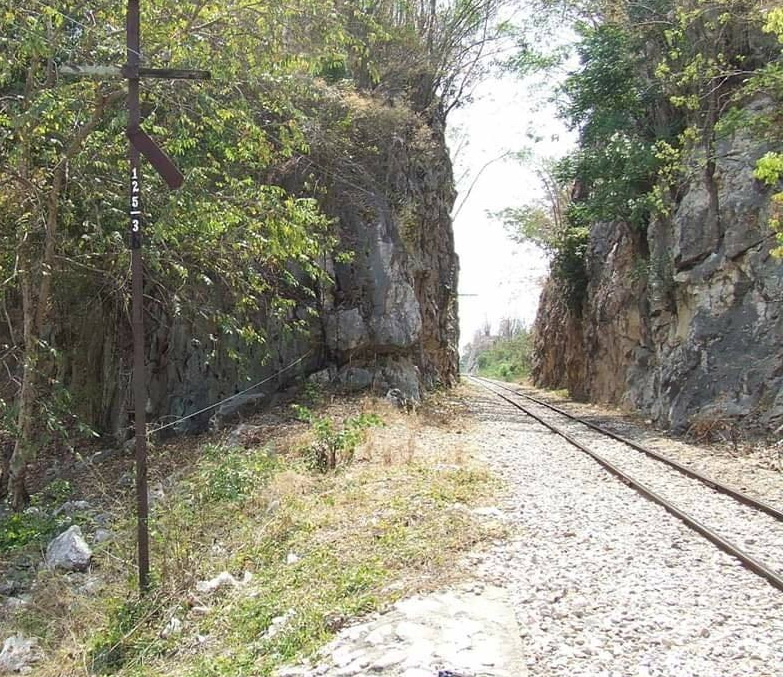
Except for the famous Bridge, there is not much in the way of physical evidence that the Thai-Burma Railway (TBR) ever existed. Most of the original iron sections of track were recycled to other parts of the State Railway of Thailand. The track, ties (sleepers) and ballast have all been replaced in the ensuing decades (almost a century).
The repaired iron bridge stands as a silent memorial to the thousands who labored and died on the TBR. But even there, only 2 tiny monuments tell anything of the history of the place. Most tourists, foreign and domestic, are loathe to cite any facts about the Bridge or the Railway as a whole. It is truly a piece of history that is being lost in the fog of time, if not war. And no one seems to care!
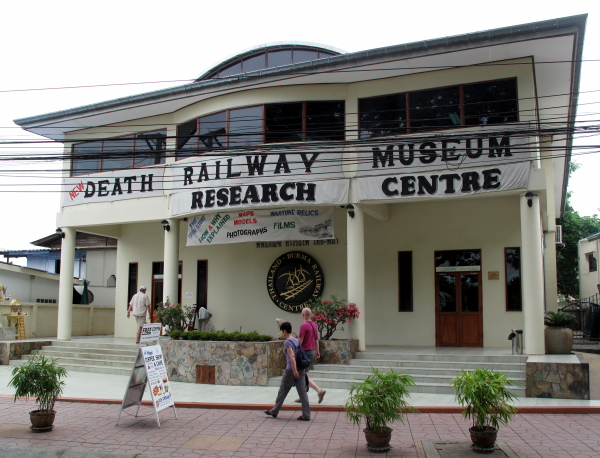
The single group that is dedicated to telling the story of the TBR is the staff of the TBRC = Thai-Burma Railway Centre. [https://www.tbrconline.com/ ] Rod Beattie and his crew have done an amazing job of telling the fullest story available via many different styles of displays and actual artifacts. It is located immediately adjacent to the main war graves cemetery in downtown Kanchanaburi. In one to two hours, visitors can learn the basic saga. But it would take multiple visits to absorb it all.
Of course, the most poignant reminder of the events that transpired from 1942-45 is the Don Rak cemetery’s nearly 7000 graves of those who perished working this project. In all, the three Commonwealth War Graves Commission cemeteries hold over 12,000 such graves. But this is far short of the actual number of deaths that occurred. Other TBR-related deaths occurred in Japan, Vietnam and Singapore where men were sent along with the maladies they contracted while working the TBR. Nearly 300 men are interred in 3 common graves having been cremated during the cholera outbreak. There are also a considerable number of POW remains that were never recovered. Except for a few dozen Dutchmen, they are not commemorated here. The less visited companion cemetery at ChungKai holds nearly 1700 more sets of remains. And another 3600 are in the third site in Burma.
In addition to these 12,000 recovered and commemorated men, tens of thousands more Asian Forced Laborers remain in the jungle without a memorial. Recently, a group of Tamils and Malaysian-Indians have rediscovered a tomb that likely holds over 10,000 of their ancestors. But these died after construction was finished. Those left in the jungle have no headstone of any sort. Hopefully, soon this group can rectify that wrong!
Perhaps the second most recognizable site is the viaduct at WangPo. Many confused tourists still think that this is the ‘original’ bridge and that the iron structure they just rode the train across is a ‘replacement’. Such is the level of knowledge and confusion over the true TBR story.
One of the oldest sites in town is actually rarely visited by any of the tourists that flock to the nearby Bridge with its jewelry and souvenir shops as well as an ersatz museum. The Thai-anusorn Shrine was built by the POWs themselves but the concept originated with the IJA staff. It commemorates those who died – both Allied and Asians – while ‘serving the Emperor’. Its story is too enigmatic and convoluted to relate here but it stands, generally unnoticed, in a quiet park about 150m from the Bridge.
For a number of reasons, I personally hold in great disdain the business that represents itself as a JEATH museum. Not only did it steal the name JEATH from the original museum (dating back to 1977), but it has the audacity to display the remains of over 100 of the Asian Laborers mentioned above in this for-profit enterprise. To make matters worse – if that is possible – 99% of what is displayed in that building has nothing what so ever to do with the TBR! Even the ‘wooden bridge’ display is fake.
Beyond just strolling across an old bridge, and possibly stopping to look in on the cemetery that they pass on the way there, comparatively few tourists visit any of the other possible TBR-related sites. This is likely because they are either on a guided tour or on a personal day-trip three hours drive from Bangkok and want to get home before dark.
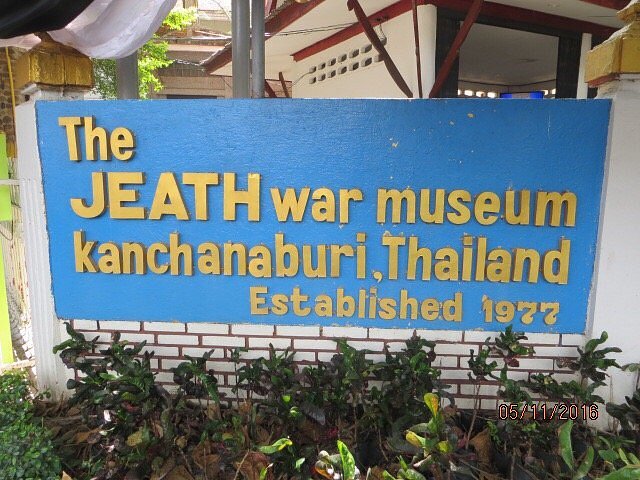
Other than the TBRC, the most informative place to go is the original (1977) JEATH museum located on the river bank in the old downtown area of Kanchanaburi city. Those who take the time to tour it cannot help but come away moved by the experience and with a bit of knowledge of the TBR saga. Since this museum is operated by the temple next door, it is technically not a for-profit business. It can be adequately – if hurriedly – toured in under an hour.
In their rush to get to and from Kanchanaburi, all the tourists drive past two other sites that no one but true aficionados of the TBR have even heard of. At the east-end start point of the TBR at the NongPlaDuk railhead, there stands a stone marker citing the place and date of the initiation of the project. The first POWs to arrive in Thailand from Singapore in June 1942 were housed at a camp there. Today, that site is a huge sugar cane field. On an adjacent field is the site of the POW cemetery. One has to know where to look to even remember what happened here.
For the first three kilometers the TBR track run parallel to the pre-existing line coming up from Singapore and Malaya. At the point where they diverge stands the Buddhist temple of Wat Don Toom. The trains arriving after their 3-5 day journey from the south would discharge their cargo (they could hardly be called passengers) in the small town of BanPong. A squalid transit camp existed on the grounds of this temple. Tens of thousands of POWs and hundreds of thousands of Asians were introduced to the TBR in that camp. They were generally happy to leave it behind, only to find much worse awaiting them. First, they had to trek 150 to 300 kms just to get to the place where they would live, work and die. Again, for me personally, this place holds the deepest of meaning. Only 39 US POWs passed through those gates. All the others arrived in Burma by ship, not train. But those 39 were have some of the worst experiences of all the 700 Americans who worked the TBR. Here, too, is a tiny and almost unknown memorial to some of the Japanese soldiers who died during their time in Thailand. We are led to believe that about 1,000 of the 15,000 or so Japanese troops died of disease or in the frequent Allied bombings.
The next site I will mention is only slightly harder to access. It is about a half-kilometer section of the TBR located just west of the ChungKai cemetery. The British POWs, many of whom were officers, that were sent to this first actual work camp laid the track from the bridge, then they moved dirt to make a 10m high berm to level the ground at the river bank before making the first two of dozens of cuttings through limestone obstacles that the TBR required. Beyond those, they built a moderate-size bridge still today called the Officer’s Bridge. With only slight physical exertion, one can walk into those cuttings and see a few of the holes chiseled in before the rock was split away.
The other place where one can feel the presence of the workers is at HellFire Pass. This is about an hour’s drive beyond the Bridge and at the 150 Kilo point of the TBR. It takes considerably more exertion to walk this path. There are 100 or more steps descending from the museum on the bluff down to the Kunyo Cutting as it is officially named. This is the first documented place where Asians labored in large numbers alongside mainly Australian POWs to chop away the 75 x 25 m outcropping. It is said that many men were beaten to death in the few weeks that it took to make this cutting. Today, the Australian government has adopted this as their official remembrance site.
Beyond this point there are only scattered remnants of anything to mark the path of the TBR. Man and Nature have reclaimed almost all traces that it ever existed. Almost anyone with a metal detector and the stamina to hike the jungle can still easily find artifacts. Too bad there is not a ‘bone detector’ of the same ilk. In 1991, hundreds of skeletons of Asians were excavated in the city. Out in the jungle, thousands of remains lie unburied and unremembered.
If you are interesting in what remains of the TBR as it looks today, I highly recommend the ExploreTBR series of YOUTUBE videos. Kevin Roberts has dedicated innumerable hours to documenting and exploring the remnants of the TBR. His goal was to provide information to like-minded explorers who might also wish to tread these hallowed paths.
LEST WE FORGET.
AUG 2025 Update:
I recently had the opportunity to escort a new visitor to the main TBR-AFL sites. My main takeaway from that day was the lack of documentation that exists to assist visitors to learn about the history of the TBR. In Sections 10 and 26 of this website, I have explained how the Thai government does not really consider what happened here as part of Thai history or culture. It was, after all, perpetrated by one group of foreigners (the Japanese) or other groups of foreigners (the Allied POWs and romusha) with limited Thai involvement. Since tourism from all of the affected countries is important to the Thai economy, they have no wish to point fingers or alienate any of those involved. The easiest path is to ignore the event as much as possible.
It is not infrequent for local school groups as young as kindergartners to visit the CWGC war cemetery at Don Rak. I often wonder what the teacher’s intent is and what they have told the children in preparation for those visits. I sincerely doubt that the TBR is widely taught in Thai schools. I’m not even sure I could construct a lesson plan that adequately explains the TBR to children. Whose perspective do you take?
So, as an expansion of the Existing Sites (Section 0.2), I thought that I’d review the existing documentation. It is quite sparse. The most extensive explanation of the TBR resides near the famous Bridge and was placed there by the Kanchanaburi Municipality, as opposed to the larger Thai government. Unfortunately, it is mostly hidden from the view of the casual tourist by density of the vendor stalls. [See Section 26.2 Commodification]. I’d venture to guess that few of the day-trippers ever find it much less read it. At least the Kanchanaburi Municipality saw fit to tell the story in both Thai and English.
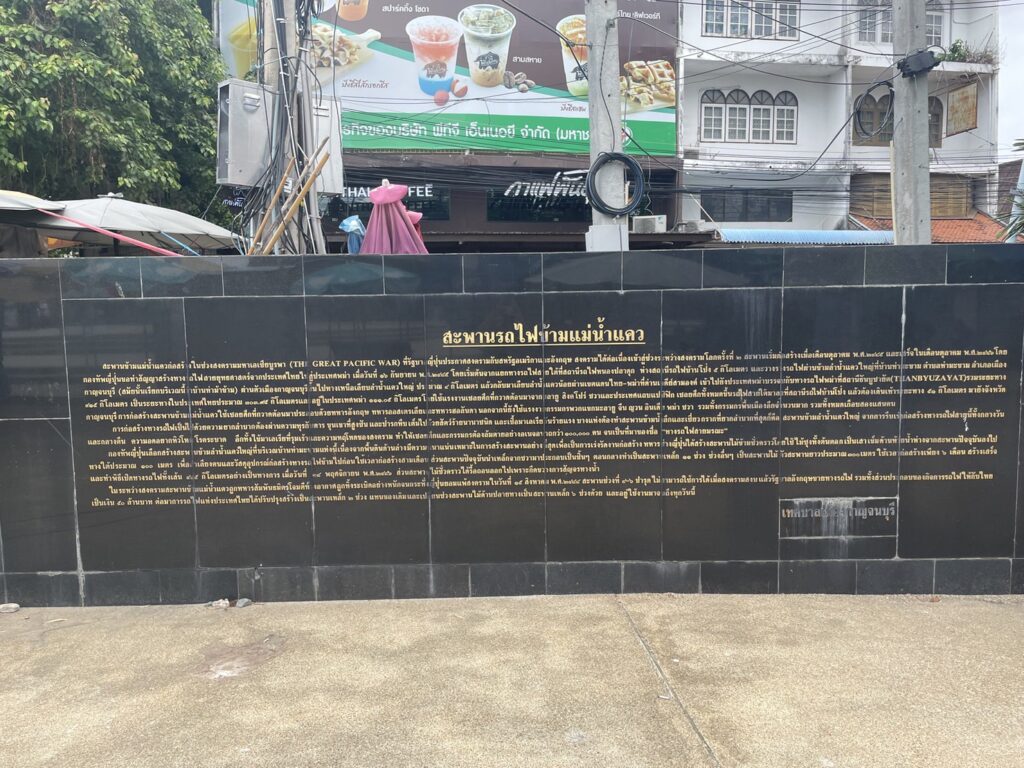
I believe that it would be an interesting and enlightening project to do a survey of the Bridge visitors to see what they actually know about the Bridge and the Railway that they are visiting. My guess would be that few could relate any facts related to the TBR or its participants.
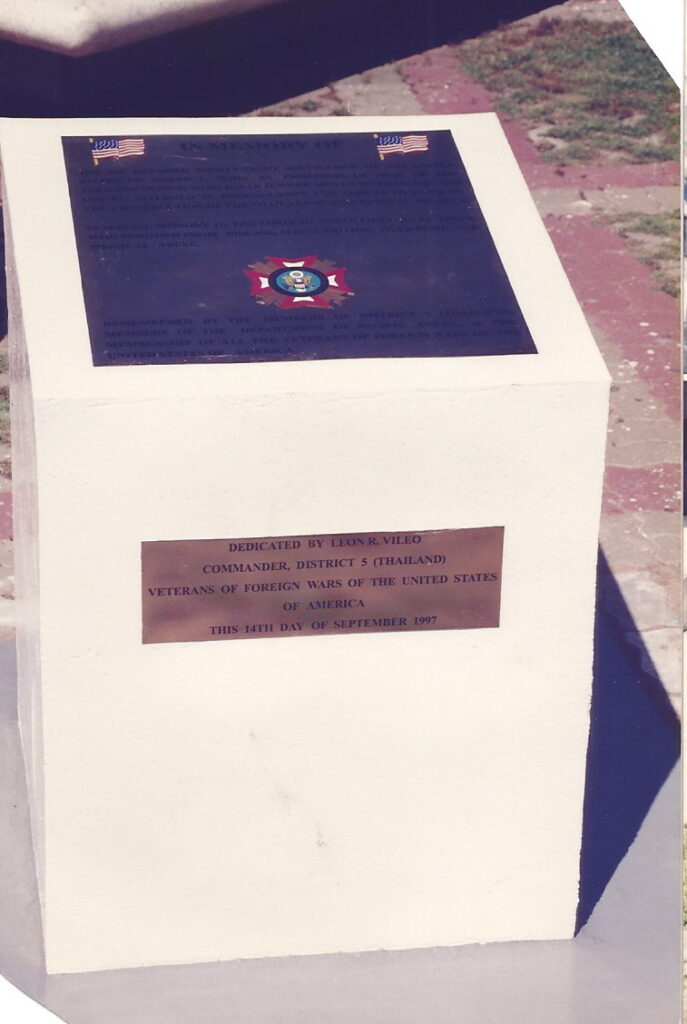
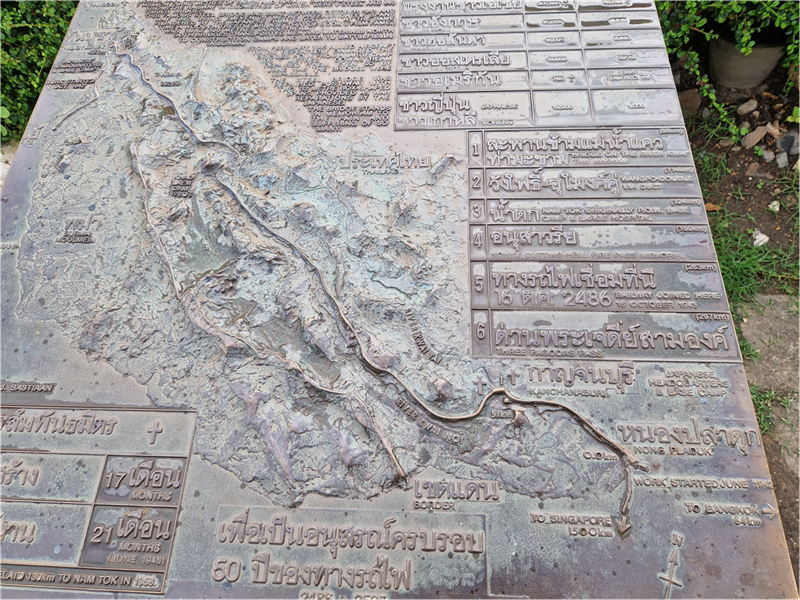
In the immediate area of the Bridge there are two memorials. One is the 1997 memorial to the US POWs and the other a map of the TBR donated by an Australian artist and philanthrope, Ross Bastiaan. While both of these serve their purpose, neither is particularly helpful in establishing their place in the larger TBR saga. In my personal experience while visiting the area multiple times, none of these three garner much attention from the visitors.
In the recent past there was apparently a sign on or near the Bridge that has since disappeared. I would also point out that the recently closed JEATH War Museum located near the Bridge was simply a tourist trap that contained little information about the TBR and what it had was mostly fabricated. [See section 34.25] Adjacent to the ‘museum’ is perhaps the most enigmatic of all of the existing TBR sites: the Thai-anusorn memorial. While it is chockful of information, one has to know a lot to learn anything from its message!
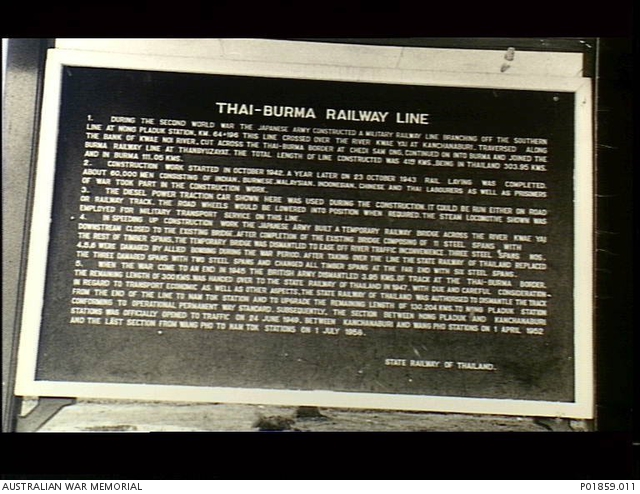
There are two sites that provide an excellent presentation of the facts and figures of the TBR. These are the original (1977) JEATH museum near the Paper Factory and the more recent TBRCtr [https://tbrconline.com/] adjacent to the POW cemetery. More from the second than the first, one could exit either with a greater understanding of horrors of the TBR. While both are reasonably well attended, their paid admissions are but a tiny fraction of the millions of visitors to the Bridge area annually.
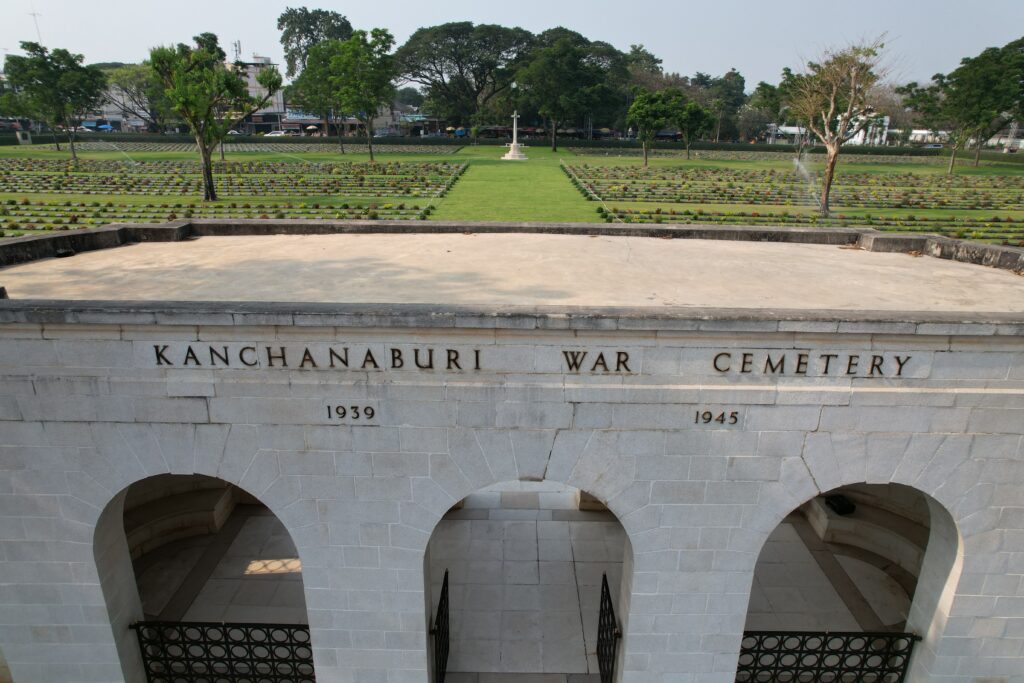
There are two CWGC-operated TBR-related POW cemeteries in the area (and a third in Burma). The larger of the two is in downtown KAN City and is on the itinerary of most tour groups and many day-trippers mainly because it is on the main road to the Bridge. The second, smaller one is across the river at ChungKai. Given the overall purpose of the London-based CWCG [ https://www.cwgc.org/ ], I have no qualms over the simple fact that neither site provides any specific information as to their place in the larger TBR saga.
While the Thai-anusorn memorial is in relatively plain view of any who wish to find it, there is another place completely unknown to any but the most avid TBR aficionado. Even its name: Chedi Niranam or Chedi of the Unknown is indicative of its history. Erected in 1957, it marks the grave of over 10,000 of the Asian Forced Laborers who survived the ordeal of building the TBR only to die after they were consolidated to the KAN area post-construction.
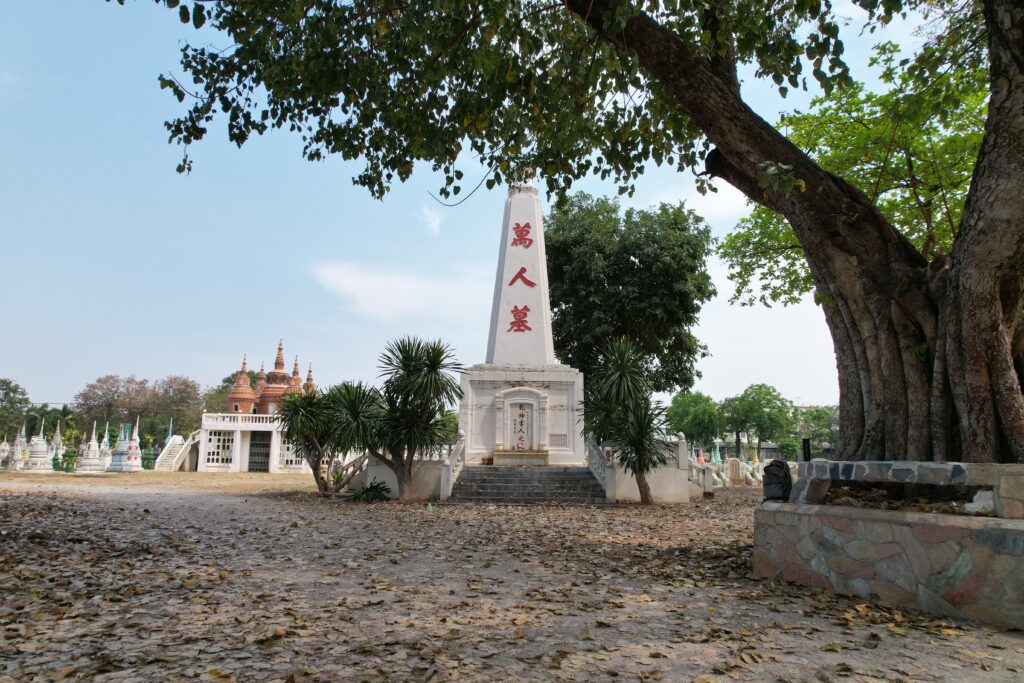
While the CWGC does an excellent job of remembering the fallen POWs, no overt effort has been made to commemorate the romusha! Hopefully, in the near future Chedi Niranam can become recognized as a true memorial to their history.
About an hour’s drive beyond the Bridge, the Australians have laid claim to HellFire Pass to commemorate the participation of the Australian POWs on the TBR. This is despite the fact that most of the Aussie POWs labored in Burma not Thailand and that they were most likely in the minority behind the romusha and British at this cutting! None the less, this and the TBRCtr are the two most accurate and authentic places of remembrance of the TBR.
Lastly, the two cuttings and a small bridge at Wat Khao Poon / ChungKai are moderately accessible but unlabeled and unvisited portions of the TBR.