
The Dutch experience of the Thai–Burma Railway occupies an unusual position in the historical record. The Dutch were the second-largest contingent of Allied prisoners to work on the railway, after the British, and estimates place their number at approximately 18,000[1]. Yet their experience has received considerably less attention in the English-language literature than the better-known British, Australian, and American stories[2].
Part of the reason may be that the word “Dutch” conceals a much more complicated population than the label suggests. The prisoners came largely from the Netherlands East Indies, where the Dutch colonial system had produced a military and civilian population of Europeans, Eurasians, and indigenous inhabitants. Among those captured in 1942 were members of the Royal Netherlands East Indies Army (KNIL), the Royal Dutch Navy, and auxiliary forces. The Dutch contingent therefore included Ambonese, Javanese, Menadonese, and Timorese personnel alongside European and Eurasian soldiers[3].
This distinction matters because the experience of captivity was not necessarily the same for all of these men. For some, the Netherlands was their country of citizenship but not their home. Their birth-place and home was the Netherlands East Indies. Others had spent their entire lives in a tropical environment and entered captivity with an experience of climate, disease, language, and local society that was fundamentally different from that of prisoners who had come directly from Europe or Australia.
The Dutch contingent also reached the railway by several different routes. Some prisoners were captured on Java, while others came from Ambon, Timor, and other parts of the Netherlands East Indies. Beginning in late 1942, Dutch prisoners were transported throughout the Japanese empire for forced labor. Groups eventually reached Burma and Thailand, with approximately 4,600 Dutch prisoners in Burma[4] by April 1943. Their movements therefore form part of the larger story of the Japanese system of forced labor rather than a single, uniform journey from capture to the railway.
The numerical record reveals another reason why the Dutch experience deserves separate consideration. Approximately 17,990 Dutch prisoners are included in commonly cited railway statistics, with approximately 2,782 deaths—a mortality rate of about 15 percent. That figure is substantially lower than the approximately 22 percent recorded for Australian prisoners and 23 percent for British prisoners[5]. The difference should not be interpreted too simply. Mortality was influenced by the particular groups and work parties to which prisoners were assigned, the timing of their arrival, their movement between camps, the availability of medical treatment, and exposure to particular epidemics and construction phases. Nevertheless, the difference is sufficiently large to demand explanation[6].
One possible factor was prior experience of life in the tropics. Many Dutch prisoners had lived in the Netherlands East Indies before the war and therefore had greater familiarity with tropical conditions and tropical diseases than prisoners arriving from temperate climates. The Dutch were also not sent into F Force, the formation whose mortality became one of the most extreme examples of the railway’s human cost. These factors do not explain the entire difference, but they demonstrate why a single overall Allied mortality figure can conceal important variations within the prisoner population.
A European Dutch soldier, an Eurasian KNIL soldier, and an indigenous soldier serving in a Dutch colonial military organization could all be recorded as Dutch prisoners while possessing very different relationships with the societies through which they moved. Their opportunities, loyalties, languages, cultural identities, and concepts of home could differ substantially.
Dutch prisoners also appear frequently in the testimony of prisoners from other Allied forces. Dutch, Australian and American prisoners were often held in the same camps or in nearby camps (particularly in Burma), and their relationships were not always harmonious. Differences in language, military culture, resources, and prewar circumstances sometimes produced tensions. Australian medical officer Edward “Weary” Dunlop, for example, recorded sharp disagreements with Dutch officers in his wartime diaries. Such testimony should not be treated as representative of all Dutch prisoners, but it is useful evidence of the complex social relationships that existed inside the prisoner population.
The Dutch story also continued after the railway itself had been completed.
Approximately 8,000 Dutch prisoners who survived their railway service were subsequently transported toward Japan. Around 3,600 died during these later movements, including more than 1,300 Dutch prisoners who died when the Japanese transport ship Junyo Maru was sunk[7] in 1944. The distinction is important. A prisoner who survived the railway construction period was not necessarily beyond the danger created by his association with the railway. The forced movement of former railway workers into other parts of the Japanese empire extended the consequences of railway captivity well beyond the completion of the line.
For the Dutch, however, liberation did not necessarily mean a straightforward return home.
When Japan surrendered, thousands of Dutch survivors remained in Thailand. The postwar situation in the Netherlands East Indies had changed radically during their captivity, and the Indonesian independence struggle complicated the question of where these men were returning. Some Dutch survivors who had considered the Netherlands East Indies their home found themselves confronting a political transformation that would ultimately end Dutch colonial rule[8]. The war had already separated them from their families and communities; the postwar struggle could make the meaning of “home” uncertain as well.
This is one of the most distinctive features of the Dutch perspective. For many British, Australian, and American prisoners, liberation ultimately meant a rapid return to a recognizable national homeland. For a significant number of Dutch prisoners from the Netherlands East Indies, the relationship between captivity, home, nationality, and belonging was considerably more complicated. The end of Japanese captivity did not restore the prewar world into which they had expected to return.
The same complexity appears in the later history of remembrance.
The experience of Dutch prisoners of the Japanese occupies a significant place in Dutch memory. The Netherlands East Indies had been part of the Dutch colonial world for centuries, and large numbers of people from the former colony later migrated to the Netherlands. Their memories of the Japanese occupation therefore became intertwined with memories of colonial loss, displacement, and the creation of an independent Indonesia.
The war cemeteries in Thailand became particularly important within that memory. More than 2,200 Dutch prisoners are buried in Kanchanaburi and Chung Kai War Cemeteries, making those cemeteries an important focus of remembrance for Dutch survivors and their families. The Dutch connection to the cemetery landscape also produced its own memorial traditions, including the establishment of the Beata Mundi Regina church near Kanchanaburi War Cemetery as a Dutch war memorial[9] in the 1950s.
The importance of place can be seen particularly clearly in the work of former Dutch prisoner Gerrit van der Schuyt. His postwar efforts to locate the camp known as Linson were not simply an exercise in historical geography. He wanted to establish the location because it had been part of his own experience and because the precise location of places where his comrades had lived, suffered, and died remained important to him decades after the war. Fridus Steijlen’s study[10] of van der Schuyt shows how the search for the physical remains of the railway could become an act of personal remembrance and a demand for recognition of an experience that survivors believed had not always been adequately acknowledged.
This is particularly relevant to the broader purpose of this book. The Dutch perspective demonstrates that the history of the railway cannot be reconstructed solely through the national categories most familiar in English-language accounts. Even within the Allied prisoner population, nationality was not a sufficient description of experience.
The Dutch case also demonstrates why the database approach used in this study is necessary. A national label can establish a starting point, but it cannot by itself explain where a man was captured, how he reached the railway, which force or work party he joined, which camps he passed through, where he became ill, where he died, where he was buried, or what happened to his remains afterward.
Nor can the category “Dutch” resolve the deeper questions of identity that surround many of these men. Some were born in Europe. Others were born in the Netherlands East Indies. Some were European, some Eurasian, and some indigenous. Some served in colonial military organizations. Some had spent their entire lives in Southeast Asia. Some survived the railway but died elsewhere. Others survived the war but returned to a world that no longer existed.
The Dutch experience therefore provides more than another national perspective on the railway. It also reinforces a larger point that runs through this chapter. The railway was experienced by people whose identities, backgrounds, loyalties, languages, and circumstances differed substantially. A history built primarily from the memoirs of English-speaking Western prisoners inevitably emphasizes some experiences over others. The Dutch record does not replace those accounts, but it complicates them.
The Dutch perspective also leads naturally toward one of the unresolved problems addressed later in this book: the difficulty of reconstructing the fate of men whose records were incomplete, contradictory, or dispersed across different national systems. Dutch records, like those of other Allied populations, contain both remarkable detail and significant gaps. The existence of a substantial documentary record should not create the illusion that every Dutch prisoner can now be followed from capture to death or liberation with equal certainty.
In that respect, the Dutch story belongs within the unfinished history of the railway.
It reminds us that even among the Allied prisoners whose governments maintained military records, whose graves were subsequently marked, and whose experiences generated memoirs and oral histories, there remain questions about identity, movement, mortality, burial, remembrance, and belonging.
The railway was therefore not experienced by “the Allied POWs” as a single population. It was experienced by thousands of individuals whose circumstances sometimes overlapped and sometimes differed profoundly.
The Dutch experience makes that distinction impossible to ignore.
Dutch Language Accounts
The Dutch-language survivor literature provides one of the richest bodies of firsthand testimony concerning the Thai–Burma Railway. Unlike many later English-language histories, these accounts frequently preserve the observations of individual Dutch POWs who experienced the railway at particular camps and at particular stages of construction.
The most useful single compilation is Mariska Heijmans-van Bruggen, ed., De Japanse bezetting in dagboeken: De Birma-Siam spoorlijn. Published in Amsterdam in 2001, the 468-page volume brings together eleven Dutch POW diaries concerning the railway. Its principal value is comparative: instead of relying upon one survivor’s recollection, it permits the reader to compare observations from different men, camps, and periods of construction.
The contemporary diaries are particularly important for reconstructing the geography of the railway. The diary of A. M. Bom, for example, follows his movement from Changi through Moulmein and the Burma-side camps around Km 85 and Km 80 and subsequently into Thailand, including Kanchanaburi and Tamarkan. Such accounts can therefore document the transition between the two construction sectors from the perspective of men who actually experienced both. The Ons Land collection and NIOD preserve additional Dutch diaries, letters, and egodocuments of this type.
Miel Cattoir is especially valuable from a different perspective. As a Dutch POW who worked as a nurse among sick prisoners, his wartime letters provide observations concerning disease, nutrition, medical treatment, wounds, and the movement of sick men through the railway camps. For a study concerned with mortality, his testimony is therefore potentially more useful than a conventional memoir of forced labor.
The Dutch survivor literature also extends beyond diaries and conventional memoirs. Jan Banning, Esther Captain, and Will Tinnemans’s Sporen van oorlog combines photography and oral history involving survivors of the Burma and Pakan Baroe railways. Such testimony is useful because it places Dutch POW experiences alongside those of Indonesian forced laborers, broadening the historical perspective beyond the Allied POW narrative.
Later Dutch secondary works, including H. L. Leffelaar and E. van Witsen’s Werkers aan de Burmaspoorweg and E. van Witsen’s Krijgsgevangenen in de Pacific-oorlog 1941–1945, should be treated differently. They are not survivor memoirs, but they are important for locating and cross-checking the firsthand testimony.
For this study, the principal value of the Dutch material is its granularity. Individual diaries can sometimes establish where a particular group was, when it arrived, what conditions it encountered, what diseases were prevalent, and how men were moved between camps. When those observations are combined across multiple Dutch accounts, they become more than personal memoir: they constitute a body of contemporaneous evidence that can be tested against CWGC records, camp lists, railway construction records, and the quantitative TBR database.
This makes the Dutch literature particularly important to the broader question of geography versus nationality. Dutch POWs were distributed between Burma and Thailand in much larger numbers than Americans and in a substantially different pattern from the overwhelmingly Thailand-based British. Their diaries therefore offer an unusually useful qualitative complement to the numerical evidence when attempting to understand why mortality varied along the railway.
Selected bibliography of survivor accounts in Dutch:
| Author | Title | Type | Relevance to TBR |
| M. von Bartheld | Krijgsgevangene bij de Birmaspoorweg 1943–45 | Memoir | Direct; detailed camp-by-camp account |
| Jan Schneider | In de hel van Birma: Ooggetuigenverslag uit de kampen langs de Birma-Siam Spoorlijn 1942–1945 | Memoir / eyewitness account | Direct |
| Otto Kreefft | Birma spoorweg: Een visuele herinnering | Memoir / drawings | Direct; valuable visual testimony |
| Joop Hulsbus | En de zon werd rood: De ondergang van Nederlands-Indië en de hel van de Birma spoorweg, 1941–1945 | Memoir | Direct |
| Hans J. Bij | Bruintje Beer, Charlie Chaplin en opa: Krijgsgevangene langs de Birma spoorweg | Memoir / family papers | Direct |
| J. C. van Hamel | Soldatendominee | Contemporary diary / memoir | Direct; valuable contemporary account |
| A. M. Douwes | Kroniek van een Nederlands-Indische geschiedenis | Memoir | Direct; extensive Thailand railway experience |
| E. van der Molen | Berichten van 612 aan het thuisfront: Zuidoost-Azië, 1940–1945 | Memoir / letters | Includes TBR experience |
| W. F. Gelderblom | Achter de kawat | Memoir | Includes TBR experience |
| Miel Cattoir | Published wartime letters and recollections | Letters / medical testimony | Particularly valuable for disease, treatment, and mortality |
| A. M. Bom | Wartime diary, 1943–45 | Contemporary diary | Exceptional geographic detail; Burma and Thailand |
| K. V. F. Gludovacz | Diary included in Heijmans-van Bruggen | Contemporary diary | Direct TBR testimony |
| A. H. Douwes | Diary, NIOD collection | Contemporary diary | Direct; includes Burma and Thailand |
| Adriaan Kannegieter | Wartime diary / account | Contemporary diary | Direct; particularly useful for 1944–45 |
[1] See Table below
[2]Australian Government, Department of Veterans’ Affairs, “Prisoners and labourers on the Burma-Thailand Railway in World War II,” ANZAC Portal https://anzacportal.dva.gov.au/wars-and-missions/ww2/pows/burma-thailand-railway/prisoners
[3] Ibid.
[4] Neil MacPherson, “Details of groups moved into Death Railway and death statistics,” identifies an “All Dutch Force” working at Wagale (8 Kilo). This is a specialist web resource rather than a conventional scholarly publication https://www.mansell.com/pow_resources/camplists/death_rr/movements_1.html
[5] Paul H. Kratoska, ed., The Thailand-Burma Railway, 1942–1946: Documents and Selected Writings, 6 vols. (London: Routledge, 2005–2006), especially vol. 3, POW Labour: Allied Prisoners of War on the Railway. https://anzacportal.dva.gov.au/wars-and-missions/ww2/pows/burma-thailand-railway/prisoners
[6] This 15% mortality rate corresponds well to the documented 18% rate suffered by the US contingent. Nearly all of the Americans and most of the Dutch worked in the Burmese Sector, but the lack of valid denominators prevents direct comparisons between the Thai and Burmese Sectors.
[7] Australian Government, Department of Veterans’ Affairs, ANZAC Portal, “Prisoners and labourers on the Burma-Thailand Railway in World War II https://anzacportal.dva.gov.au/wars-and-missions/ww2/pows/burma-thailand-railway/prisoners These men, however, were not TBR-veterans
[8] Remco Raben, “Dutch Memories of Captivity in the Pacific War,” in Kevin Blackburn and Karl Hack, eds., Forgotten Captives in Japanese-Occupied Asia (London: Routledge, 2008), 94–110. https://research-portal.uu.nl/en/publications/dutch-memories-of-captivity-in-the-pacific-war
[9] Remco Raben, “Dutch Memories of Captivity in the Pacific War,” and Fridus Steijlen, “To the Memory of Comrades: Dutch Memories of the Burma Railway,” Public History Review. https://anzacportal.dva.gov.au/wars-and-missions/ww2/pows/burma-thailand-railway/remembering https://research-portal.uu.nl/en/publications/dutch-memories-of-captivity-in-the-pacific-war
[10] Fridus Steijlen, “To the Memory of Comrades: Dutch Memories of the Burma Railway,” Public History Review.
By the Numbers
| Nationality | Total POWs working on TBR | Burma sector | Burma deaths | Thailand deaths | Burma death rate | Thailand death rate | ||
| British | 30131 | 500 | 29,631 | 89 | 5676 | 18% | 19% | |
| Dutch | 17990 | 5,600 | 12,390 | 510 | 1723 | 9% | 14% | |
| Australian | 13000 | 4,900 | 8,100 | 605 | 1736 | 12% | 21% | |
| American | 688 | 648 | 40 | 116 | 4 | 18% | 10% | |
| Total | 61809 | 11648 | 50161 | 1320 | 9139 | 11% | 18% | |
| percent | 19% | 81% | 13% | 87% |
Most readers would likely be surprised that the Dutch had the second largest contingent of the Allied POWs. While the 30K British comprised nearly 50% of all the POWs, the Dutch at nearly 18K had about 5K more than the Aussies. Of course, the American contingent (<700) was the smallest. What is perhaps even more surprising is how many of the Dutch ended up in the Thai Sector.
By policy, the IJA routed POWs from Java (and possibly other DEI islands) into the Burma Sector, while Singapore captives went by rail to Thailand. The Australian War Museum states that just under 3000 Australians were captured on Java while 15,000 became POWs at Singapore. Not all of these men worked the TBR. Reportedly, the 600 AUS who were part of Black Force, which included the US TXNG artillerymen, were routed to Burma. Wherever they ended up, all the POWs from Java transited through Singapore. There were two major groups of AUS POWs. One was known as the Java Group. These transited Singapore to Burma in 1942. The other, known by their commander LtCol Weary Dunlop arrived in the Hintok area in early 1943. Overall, about 90% of the Australians who worked the TBR were Singapore captives.
I relate these details to contrast them to the Dutch experience. By definition, the Dutch POWs originated in Java[1]. Early in the construction phase, mixed groups of US, AUS and Dutch POWs arrived in Burma as per the IJA plan. But also see substantial numbers of Dutch at the Nong PlaDuk camp in 1942 as well. Many of these were then transferred to ThaMaKam to build the iron bridge. Ultimately, about two-thirds (12k of 18K) of the Dutch were routed into Thailand. By contrast, the Dunlop Group was the only large contingent from Java to arrive in Thailand. Most of the other AUS POWs came as part of F or H Force (or the later but smaller K & L Forces). These were almost exclusively Singapore detainees not from Java.
The largest group of Dutch arrived in Thailand in Jan-Feb 1943 as part Java Groups 6, 8 & 9. In total, these comprised about 8800 Dutch and 1200 Australians. The 3200-man H Force (arriving n May 1943), was thought in have included about 600 Dutch (and 26 Americans). Scattered reports suggest that most of those 8800 men worked the area between Tarsao (KILO 125) and Hintok (beginning at KILO 150) although some undoubtedly worked at HellFire Pass as well. Fortunately, as far as the death toll was concerned, no Dutchmen were included in F Force.
In the Table above, the right two columns display death rates in the two sectors. The death counts are accurate data, but the population figures are estimates, so these rates are also approximations. The one consistency is that the Burma Sector rates are somewhat better than on the side. But given that only 20% of the total workforce toiled in Burma, the importance of that difference is diminished.
There is still an unanswered question about Dutch POWs. It is not at all clear, what the actual racial/ethnic make-up was. A report compiled for the KNIL in 1929[2] cites that men with European blood comprised about 20% of the pre-war KNIL. But even here there would be a clear separation between full-blooded Europeans and those of mixed blood. The former comprised many, if not most, of the officer corps; Dutch military assigned overseas. The remainder would be Dutch citizens who likely never set foot in Europe. Seemingly, it was from this group of true Dutchmen that the TBR POWs were drawn. The burial records are of use here. All of the nearly 3000 Dutch graves in the CWGC cemeteries, display “European” names. In that era, many natives of Java would have had only a single name as opposed to a forename, middle name(s) and surname. Others were Muslims whose names would follow Arabic naming conventions. No such names appear on the TBR-related graves.
Although it is not formally documented, separation of the native islanders from their ethnic European officers and comrades would fit the pattern in Singapore where the British cadre were separated from the ethic Indian troops. There is no evidence that native islanders were sent to work the TBR.
We must be careful, however, to distinguish between native members of the KNIL and the non-military workers who were eventually exported from Java as part of the larger romusha work force. Estimates are that between 7500 and 10,000 Javanese romusha worked the TBR. Like most of the romusha story, what happened to the Javanese work group is not well documented. A post-war Dutch Red Cross survey found some 4000 Javanese romusha in Thailand. But that number cannot be extrapolated into defining what became of the others. Surely, many died during construction. Once consolidated at Kanchanaburi, some simply blended into the Thai culture and countryside. Because of political and economic unrest in both Europe and islands of the Dutch East Indies, most of the Dutch POWs and romusha alike remained in Thailand until mid-1947 before they could be repatriated.
[1] There are reports of a small number of Dutch captured at Singapore but these were apparently Navy personnel who were not part of TBR.
[2] Marc Lohnstein, Royal Netherlands East Indies Army 1936–42 (Oxford: Osprey Publishing, 2018), 5, “KNIL ethnic composition, 1929.
======================================
The Beginning of Archaeology in Thailand and the Origin of Ban Kao Museum, Kanchanaburi
The Thai–Burma Railway was the starting point for archaeological studies in Thailand and also the starting point for the Ban Kao Museum in Kanchanaburi. The first systematic archaeological study in Thailand conducted according to international standards originated with the discovery of prehistoric stone axes by prisoners of war who came to build the Thai–Burma Railway.
It may be difficult to believe, but although most people view the construction of the Thai–Burma Railway only in terms of the terrible suffering associated with it, there was also another, more positive aspect. The construction created an opportunity for research and investigation that eventually led to the first systematic archaeological excavations in Thailand, a tradition that has continued to the present day.
One of the most important people in this story was Hendrik Robert van Heekeren, a Dutchman born in Semarang, on the island of Java in the Dutch East Indies, now Indonesia. At that time, Indonesia was a Dutch colony. He was born on June 23, 1902. As a young man, he worked on a tobacco plantation.
Van Heekeren developed an early interest in archaeology, particularly prehistoric archaeology. He used his free time and his own money to study archaeology, conduct surveys, and undertake excavations, eventually becoming an amateur archaeologist. He also received guidance from more experienced archaeologists, and was eventually able to publish several articles describing his archaeological investigations.
During World War II, the Japanese military occupied Southeast Asia, and the territory of present-day Indonesia came under Japanese control.
The Japanese needed labor to construct the railway. Dutch civilians and military personnel living in Indonesia were therefore brought to work on the Thai–Burma Railway, also widely known as the Death Railway. Van Heekeren was among them.
The group of approximately 400 Dutch prisoners of war with whom Van Heekeren traveled arrived in Thailand in March 1943. They were sent to the camp at Ban Kao, Kanchanaburi. Conditions at this camp were not as harsh as those in camps farther into the jungle.
One day, while Van Heekeren was working on railway construction, he discovered a number of Stone Age tools in an area beside a stream whose water had dried up. Near Ban Kao railway station, he also found two polished stone axes, which were Neolithic tools. He also discovered a chipped stone axe in a cave at Wang Pho.
Because Van Heekeren was already an archaeologist and had previously conducted excavations and studied different types of stone tools in Indonesia, he was immediately able to distinguish between naturally occurring stones and deliberately manufactured stone tools.
Van Heekeren attempted to conceal the stone axes he had discovered. At the end of 1943, construction of the railway was completed. He was subsequently sent to work in a coal mine in Japan. When the war ended in 1945, he was liberated—fortunately, having survived the war.
After World War II ended, Van Heekeren returned to Indonesia. He subsequently wrote an academic article about his discovery of the stone tools in Thailand, which was published in The Illustrated London News, a well-known British periodical. The article attracted the attention of Western archaeologists because the discoveries represented some of the first recognized evidence of prehistoric archaeology in Thailand.
The stone tools were examined at the Peabody Museum at Harvard University in the United States. The examination confirmed that they were genuine prehistoric stone tools and that they bore similarities to prehistoric tools found elsewhere in Southeast Asia.
The story generated considerable interest among archaeologists and eventually contributed to the establishment of a Thai–Danish archaeological cooperation project to investigate prehistoric archaeological sites in Kanchanaburi, particularly in the Ban Kao area. Van Heekeren, who had originally discovered the stone tools at Ban Kao, participated in the excavations conducted from 1960 to 1962.
The Thai–Danish cooperation project is regarded as the first systematic archaeological investigation in Thailand conducted according to international archaeological standards. Numerous stone tools, ornaments, and human remains were discovered, representing the Paleolithic, Mesolithic, and Neolithic periods, as well as the Metal Age.
These discoveries demonstrated that people had lived in the Ban Kao area and along the Khwae Noi River since prehistoric times, for at least 3,000 years. The area subsequently continued to serve as a place of settlement and as a trade and travel route during the Dvaravati period and has remained inhabited to the present day.
To preserve the archaeological discoveries, the Thai authorities established the Ban Kao National Museum to conserve and display the excavated artifacts and provide an opportunity for interested members of the public to study and learn about them.
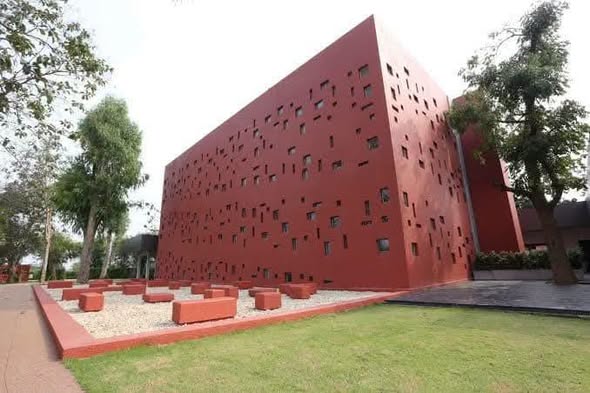
In this sense, the history of World War II—the arrival of the Japanese military, prisoners of war, and Asian forced laborers—can be seen as an unexpected starting point for the development of internationally oriented archaeological research in Thailand.
Unfortunately, however, Kanchanaburi Province itself, and even the Fine Arts Department, have not recognized the significance of this connection as seriously as they might have. I say this because Kanchanaburi has never had a museum concerning the Thai–Burma Railway that is operated by a government agency.