There are 4 movies/books that lay people (non-historians) might have seen/read that form the basis of their knowledge of the Thai-Burma Railway saga and may be the basis for questions they might pose.
The best known of these is David Lean’s 1957 version of Pierre Boulle’s book Bridge on the River Kwai. Next is The Railway Man based on the actual experiences of British POW Eric Lomax. In To End All Wars, the director took a stab at telling a wider story. He created a fictional group of POWs then placed them at various places and had them experience some of the more common situations as related by the POWs themselves.
Lastly, is the book and movie King Rat set in Changi Prison in 1945.
Bridge on the River Kwai
Due to its age, many younger generation tourists may not have actually heard of or seen the book / movie. But these are reason that a tourist industry grew up around the Kanchanaburi Bridge in the early 1960s. Simply stated it is great theater but terrible history. Except for the fact that there was such a bridge built by British POWs everything else is pure fiction! With apologies to William Holden, there were no US POWS present at the building of these bridges. A fuller treatment of this topic can be found here: https://www.uspowtbr.com/1-1-the-novel/
The Railway Man
This book and movie adaptation recount the harrowing arrest and interrogation of British POW Eric Lomax as well as his re-unification with his nemesis Takashi Nagase. A tidbit of history largely lost in his telling of the story is that fellow POWs died as a result of their involvement in this episode and two of the US POWs were convicted and sent to prison. Although it portrays only a blink of an eye of the Allied POW experience, it is highly historically accurate.
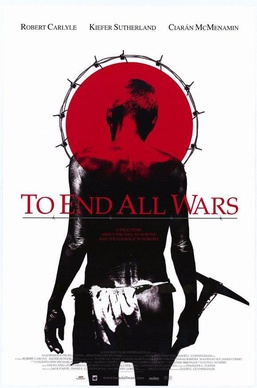
To End All Wars
Although it is the most recent (2001), this movie is somewhat less well known. It stars Kiefer Sutherland as a US POW whose work group finds itself in most of the best known places on the Railway such as HellFire Pass. It seems as though the writers and directors took well known episodes of the overall Allied POW experience and placed this fictional group in every one of them. If one accepts that no one group of POWs was actually present at these many sites, this movie does a good job of portraying the generalized but greatly sanitized POW experience.
JULY 2025 Update:
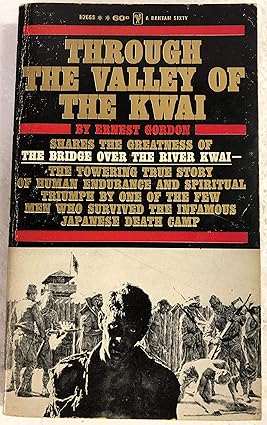
I was somewhat surprised to learn that this movie was not a pure Hollywood construct. It is actually based on the book Through the Valley of the Kwai authored by a Scottish POW named Ernest Gordon who is portrayed as one of the minor characters in the movie. I have yet to rear the book, so I can’t comment on how faithful the plot is to the book.
King Rat
This book/movie are less about the Thai-Burma Railway but more directly connected to Singapore’s Changi prison POW camp.
James Clavell, himself, was British POW at the Changi camp. He is said to have drawn heavily on his own experiences for his 1962 novel. That book is probably more widely known than the later (1965) movie adaptation starring George Segal. The “King,” is an American corporal who has risen to a position of influence within the camp through his resourcefulness and black-market dealings. The story delves into his complex relationships with fellow prisoners, notably (fictional characters?) Peter Marlowe—a British RAF Flight Lieutenant—and Robin Grey, the camp’s British Provost Marshal. Through these interactions, Clavell examines themes of survival, morality, and the dynamics of power in extreme circumstances.
Clavell never actually names the “King”, but other US POWs have speculated on the man they believe was the primary culprit. PFC Cleon Stewart identifies him as CPL Albert Lewis “Buttercup” Carpenter[1]. Stewart admits to being a partner-in-crime with Carpenter early on in their incarceration at the Bicycle Camp (earlier on Java), but says that Carpenter went “over the line” once they reached Changi. Stewart says that he distanced himself from Carpenter out of fear of his being caught by the Japanese for the black marketing enterprise he ran.
It is perhaps more likely that the Clavell character is an amalgamation of Carpenter, USS Houston SM1c Robert Martin and Merchant Mariner Eddie MacArthur (SS Humphrey).
Carpenter and Martin were members of what became known as the LOST BATTALION in that the 2nd Bn of the 131st Field Artillery Regiment of the Texas Nation Guard and survivors of the sinking of the USS HOUSTON were taken as POWs on the island of Java in MAR 1942 but the Japanese authorities failed to notify any entity (Red Cross) of that event. Most of these men were sent to Burma where they worked on the Thai-Burma “Death” Railway. Others went to Japan. But all passed through Singapore en route to their final destination. As each group left Singapore for the next stage of their journey, inevitably a few men were too ill to continue and stayed in place there. That is how each of these men came to be at the Changi camp in 1945 when Clavell set his novel.
[1] More information can be found at https://www.uspowtbr.com/carpenter-king-rat/
=====================
CHATGPT:
James Clavell’s novel King Rat is a semi-autobiographical work based on Clavell’s own experiences as a prisoner of war during World War II. It is set in the infamous Changi POW camp in Singapore, where Allied prisoners were held under brutal conditions by the Japanese.
In the novel:
- The “King” is Corporal King, an American POW who becomes a central figure in the camp due to his resourcefulness, charisma, and ability to thrive in the dire conditions. King uses his wit and entrepreneurial skills to trade, barter, and maintain a certain level of influence and relative comfort compared to the other prisoners. Despite the hardships, he embodies survival and adaptability.
- Changi Prison Camp was notorious for its harsh conditions. Thousands of Allied soldiers, including Clavell himself, were interned there, and many died due to malnutrition, disease, and mistreatment.
King Rat explores themes of survival, morality, and the dynamics of power within the microcosm of the camp. It contrasts King’s pragmatic, almost amoral survival instincts with the struggles of other characters who cling to traditional moral values and military discipline.
The novel reflects Clavell’s observations about human behavior under extreme circumstances, offering a gripping, albeit fictionalized, perspective on life in Changi during World War II.