
There were very few positive things that accompanied the Thai-Burma Railway tragedy. One of these is exemplified by the Ban Kao[1] Museum. This is a government-run facility[2] located about a half-hour’s drive west of the famous bridge. It was originally opened in 1964 but underwent a major renovation and expansion, re-opening in 2022. It concentrates on telling the archeological history of Thai culture.
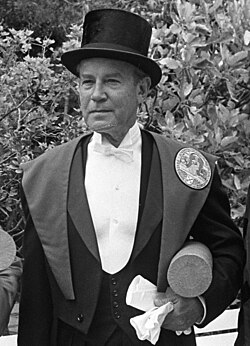
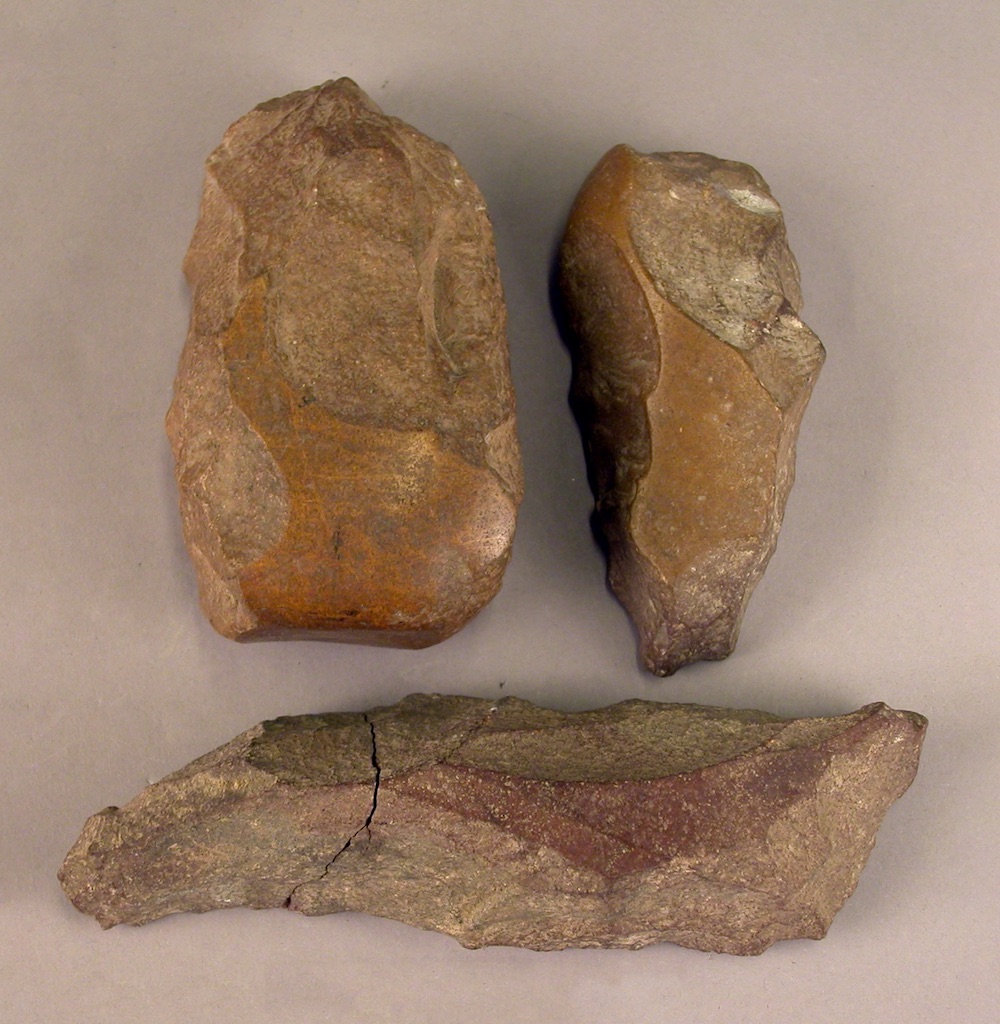
So what is the connection to the Thai-Burma Railway? H. R. Heekeren was a Dutch archeologist working in the Dutch East Indies (today’s Indonesia). He found himself among some of the earliest POWs sent from Java to work the Railway. While working out of one of the small camps near the Kwai Noi River (at about KM 88; just east of Wang Po), he noted some rocks among the ballast. To his trained eye, these showed the unmistakable marks of human activity. Shards had been chipped off them to make stone tools. This was evidence of the presence of human habitation in this area tens of thousands of years ago in the Stone Age. To his knowledge, no such activity was recorded in this part of Asia. In collaboration with Harvard University, formal exploration and excavations began in 1960. This confirmed and expanded the understanding of the pre-historic presence of communities in the plains between the two rivers that cut across the Province of Kanchanaburi. This is reminiscent of the beginnings of human history on the plains between the Tigris and Euphrates Rivers.
The sheer fact that he was able to collect these artifacts and hold on to them despite being shipping on to Japan following the completion of the TBR, is in itself remarkable!
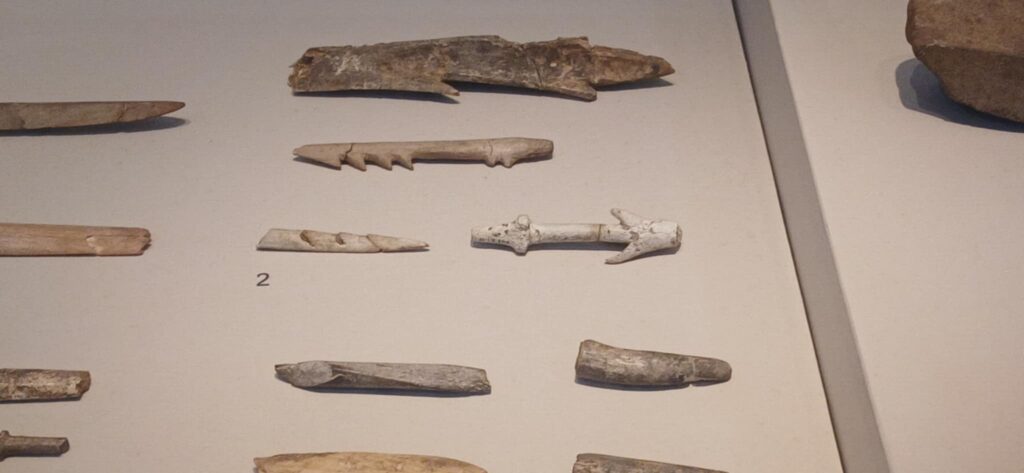
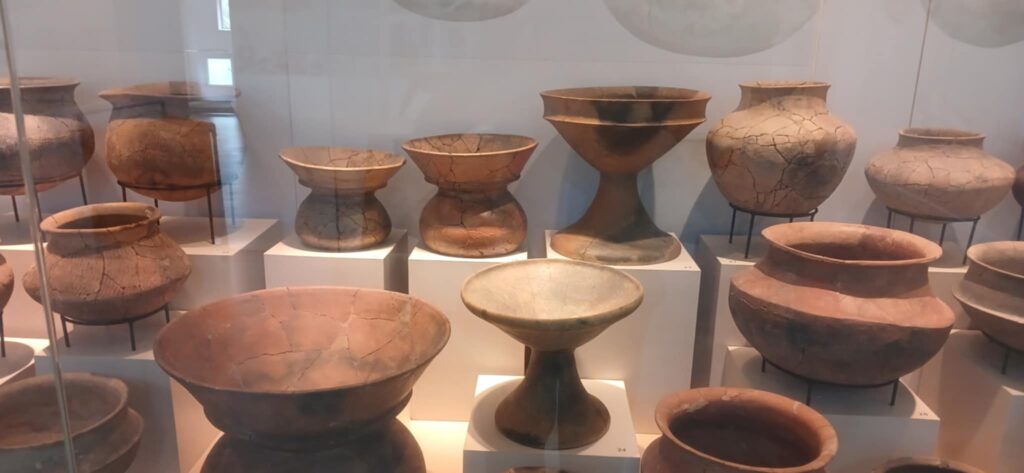
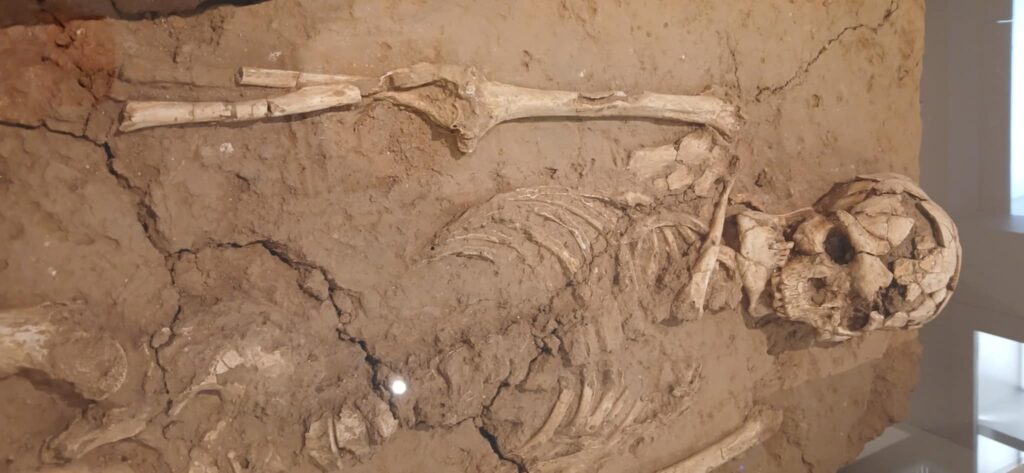
Over time, Thai archeologists took over the studies. They were able to document the progression of Thai cultural history from the Stone Age to the Bronze Age and then The Iron. Thousands of artifacts of primitive stone and bone tools, ever more sophisticated pottery and evolving burial practices were discovered. Connections were made to these communities having contact with far-flung contemporaries both from other parts of Thailand as well as other Asian areas.
The current museum building is organized on three floors each detailing the progression of these dwellers over time. The ground floor is the oldest Stone Aged portion. Second floor takes one through pottery and Bronze the Iron Age progress. On the third floor are somewhat more recent (in archeological terms) finds of wooden “dugout” coffins, cave art and burial practices. These are linked to other such sites across Thailand and elsewhere.
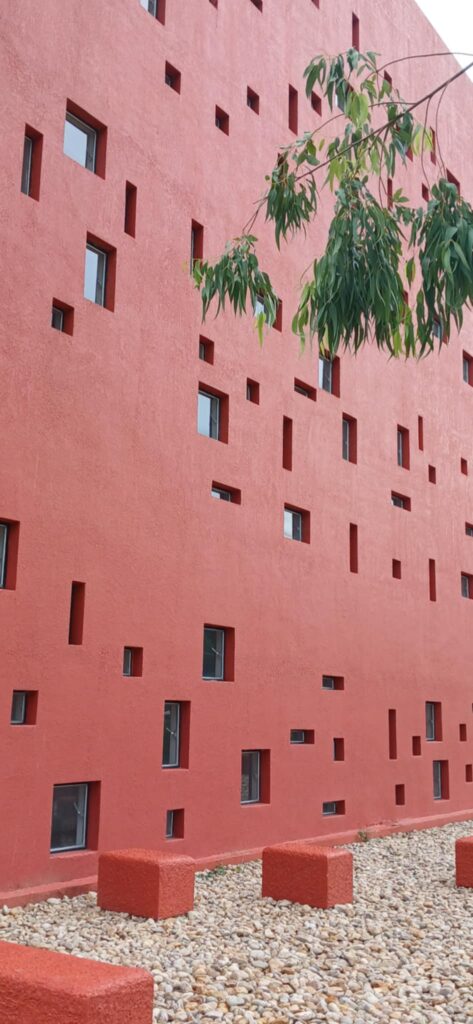
Although it doesn’t scream archeology, the external appearance of the building is quite impressive. It is a brick-red cube punctuated by small window-like openings.
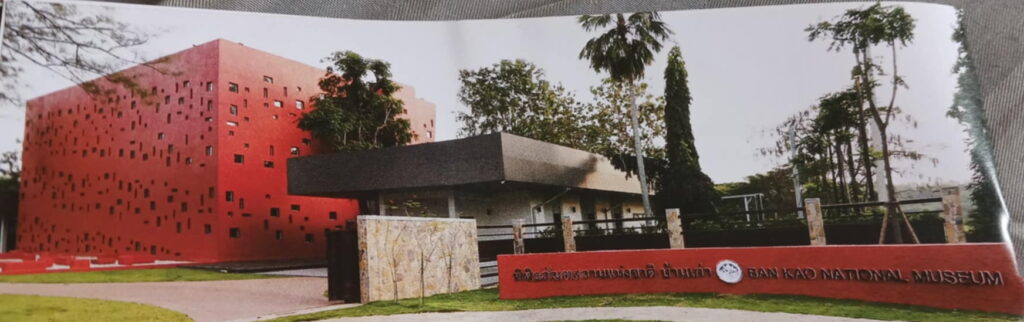
This museum is certainly not a hot tourist attraction for either Thais or foreigners. In the 2 hours that we were there, there was a steady trickle of patrons totaling perhaps a dozen. So my entry fee of 120 equaled the sum of the others!
[1] BAN KAO (or ban gao) can be translated as ‘old house’ but there are also references to it being named Ban Khao or ’mountain house’. Re-looking the sign and address, the proper translation is ‘old house’ or บ้าน เก่า
[2] As a government operated facility it charges a nominal admission fee for Thai citizens of 10 baht (30 cents US$) and 120 baht for non-Thais. Some refer to this as double-standard pricing, but I see it as tax-payer versus non-tax payer. Surely the tiny number of non-Thai visitors is not a money maker!
=========================
CHAT GPT’s description of Heekeren:
Hendrik Robert van Heekeren (1902–1974) was a Dutch–Indonesian archaeologist renowned for his pioneering work in Southeast Asia, particularly in Indonesia and Thailand.
🏛️ Early Career & Indonesia
- Born in Semarang, Indonesia, van Heekeren turned from a tobacco planter to a passionate amateur archaeologist focusing on East Java and South Sulawesi before WWII alamy.com+11doczz.net+11docslib.org+11.
- He published two cornerstone books: The Stone Age of Indonesia (1957, revised 1972) and The Bronze–Iron Age of Indonesia (1958) books.google.com+5archaeologs.com+5oxfordreference.com+5.
🕯️ POW on the “Death Railway”
- Captured by Japanese forces in Java in 1942, he was sent to Kanchanaburi, Thailand, to work on the notorious Thailand–Burma Railway researchgate.net+3sapiens.org+3bangkokpost.com+3.
- Even as a prisoner of war, he conducted clandestine archaeological research—examining spoil heaps, recovering stone tools during brief breaks, and safeguarding notebooks and artifacts under threat of punishment sapiens.org+1sapiens.org+1.
- His collection was temporarily confiscated during transfer to camps in Japan but was miraculously returned and preserved, eventually finding its way to Harvard’s Peabody Museum sapiens.org.
🪦 Post-War Excavations in Thailand
- Van Heekeren returned to Thailand (1960–62), digging at sites like Sai Yok rock shelter and excavating one of the earliest known Mesolithic burials (~10,000 BP) docslib.org+11researchgate.net+11sapiens.org+11.
- He identified a local “Fingnoian” stone-tool complex and documented Hoabinhian material near caves researchgate.net.
- These findings greatly advanced understanding of subsistence, burial practices, and mollusc use in prehistoric Southeast Asia oxfordreference.com+11researchgate.net+11sapiens.org+11.
🌍 Later Career & Legacy
- He served as official prehistorian for both Dutch and Indonesian archaeological services (1946–56) and later held positions in Indonesia and abroad (Thailand, Tanzania, Netherlands Antilles) docslib.org+4scribd.com+4doczz.net+4.
- He received an honorary doctorate from Leiden University in 1965 and remained academically active internationally until his death in 1974 wikidata.org.
Why He Matters
- Van Heekeren’s dedication—conducting serious archaeology under brutal POW conditions—and later full-scale excavations laid foundational work for Southeast Asian prehistory.
- His pioneering documentation of Mesolithic burials and tool cultures influenced decades of subsequent research in the region.
- His publications remain essential references, and his legacy lives on through artifacts in major museums.
Further Resources
- Oxford Reference provides a succinct profile of his contributions scribd.com+11oxfordreference.com+11sapiens.org+11.
- The Sapiens article “An Archaeologist on the Railroad of Death” offers a vivid narrative of his wartime work and post-war impact sapiens.org+1sapiens.org+1.
- A recent Thai–Danish survey (2024) highlights van Heekeren’s Sai Yok excavations archaeologs.com+11thesiamsociety.org+11researchgate.net+11.